

Binance Beginner Tutorial 2026: Register → KYC → Buy → Withdraw Full Path
Binance beginner tutorial 2026: the six-step path from download, sign-up and KYC to buying USDT, buying crypto and withdrawing, with a linked guide at each step.
Browse all CoinTrailHub articles, from crypto basics and exchange usage to wallet security, USDT transfers and on-chain assets.
Binance beginner tutorial 2026: the six-step path from download, sign-up and KYC to buying USDT, buying crypto and withdrawing, with a linked guide at each step.
A stablecoin is a type of crypto asset whose price is designed to stay relatively stable. The most common ones, USDT and USDC, are pegged to the US dollar and usually trade around 1 coin ≈ 1 dollar. But a stablecoin is not dollar cash and not a bank deposit. This article explains how stablecoins differ from US dollars and bank deposits, and which one a beginner should pick first: USDT or USDC.
How to withdraw from Binance to your bank account? A 2026 Binance withdrawal tutorial explaining the seven-step P2P USDT-selling flow, fees, arrival time, and bank-account freeze risk. With a real USDT/fiat sell record, Verified Merchant compensation conditions, and a BPay SWIFT USD withdrawal fee of 25 USD from a real interface.
How to spot trade on OKX? A 2026 guide to buying and selling BTC on OKX, covering USDT transfers between accounts, BTC/USDT market orders and limit orders, fees, order cancellation, and the 10x leverage indicator. Includes an 89.06 USDT transfer and two ~50 USDT real trade records.
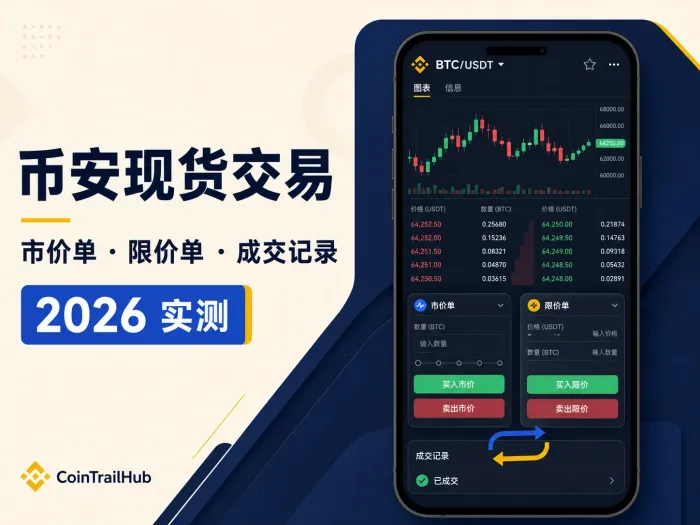
How to trade spot on Binance? A 2026 tutorial on buying and selling BTC on Binance spot, explaining insufficient USDT balance, fund transfer, market vs limit orders, viewing BTC after fill, fees, and the difference between selling and withdrawing. With a real 49.47 USDT market buy and an 81,000 USDT limit-order cancellation record.
What is Ethereum? This article explains ETH, how smart contracts work, how gas fees are priced, how Web3 wallets interact, common DeFi protocols, the technical nature of NFTs, and the differences between Layer2 scaling solutions, all in a beginner-friendly way. It helps you clearly understand the core difference between Ethereum and Bitcoin and Ethereum's key role as Web3 ecosystem infrastructure, building a complete framework for understanding smart-contract platforms and decentralized applications. Worth bookmarking as an intro.
What is Bitcoin? This article explains, in beginner-friendly language, how BTC works, the blockchain technology behind it, the design logic of the 21-million supply cap, how the four-year halving cycle affects price, the public/private key mechanics of wallet addresses, and the "digital gold" value narrative — so you first understand why Bitcoin is called digital gold, before moving on to the wider crypto world. Good for beginners building a complete mental framework from underlying tech to investment properties. Worth bookmarking.
What is blockchain? The complete 2026 beginner's guide. From the core principle of the underlying distributed ledger, the full flow of on-chain transfers, and the public/private key mechanics of crypto wallets, to common phishing and fake-platform risks — this article helps you thoroughly understand the fundamental difference between blockchain and traditional internet platforms. After reading, you'll know why you must confirm the network before transferring, and always do a small test before a large transfer. It helps you build safe operating habits and a systematic understanding of Web3 public chains and application tracks. Worth bookmarking.