
What Is BNB? Is It Worth Buying? Fee Offsets, Staking Yield, and Risk, Calculated (2026)

Table of contents

Binance new user rewards
20% trading fee rebate
Official Binance registration. Complete identity verification (KYC) to trade and withdraw.
What is BNB?
BNB is the native token of BNB Chain, and can also be used for Binance fee offsets, BNB Chain gas, staking, and certain Launchpool and Megadrop events.[1]
Whether BNB is worth buying isn't about predicting how high it will go later — it's about first judging whether you have a real use case.
My conclusion up front:
- Trade on Binance often: holding a small amount of BNB is useful for fee offsets;
- Use BNB Chain often: you need a small amount of BNB to pay gas;
- Want to join staking or Launchpool: only if you're already willing to accept BNB's price volatility;
- Buying purely because it "might go up": that's an investment, not a use case;
- Barely use Binance or BNB Chain: no need to hoard BNB just for a fee discount.
Under Binance's rules and my account tests at the time this article was verified, paying spot and margin trading fees with BNB gets a corresponding discount, and futures fees have a separate BNB offset rule.[2]
About 11 minutes to read. First, remember two things: BNB's utility (fees, gas, staking) and how much it's worth are two different questions; holding a few hundred dollars of BNB long-term just to save a few dozen dollars in fees is usually not worth it.
What you really need to work out isn't "is BNB useful," but four numbers:
- how much you actually save in fees over a year;
- how much BNB you'd need to hold on average to save that;
- whether BNB's price swings exceed the fee savings;
- whether staking, Earn, and Launchpool returns can compensate for the holding risk.
Let's work through each.
Note: This article is based on personal experience, Binance account tests, and official materials, and does not constitute investment advice. Fee discounts, event rules, staking yields, and BNB prices can all change — always refer to what's shown on your account in real time.
What is BNB? How does it relate to Binance and BNB Chain?
BNB is the native token of BNB Chain, and also a common fee-settlement asset in the Binance ecosystem.
The names beginners most easily confuse are these:
| Name | What it is | Relationship to BNB |
|---|---|---|
| Binance | A centralized crypto trading platform | You can use BNB to offset some trading fees |
| BNB | A crypto asset | The native token of BNB Chain |
| BNB Chain | A blockchain ecosystem | Uses BNB to pay on-chain gas |
| BSC / BNB Smart Chain | BNB Chain's smart-contract network | Common BEP20 assets run here |
| BEP20 | A token standard | Assets like USDT can be transferred over the BEP20 network |
Simply put:
Binance is the trading platform, BNB is the token, and BNB Chain is the blockchain network.
What makes BNB special is that it covers two scenarios at once:
- In your Binance account, it can pay some trading fees;
- In a BNB Chain wallet, it can pay on-chain gas.
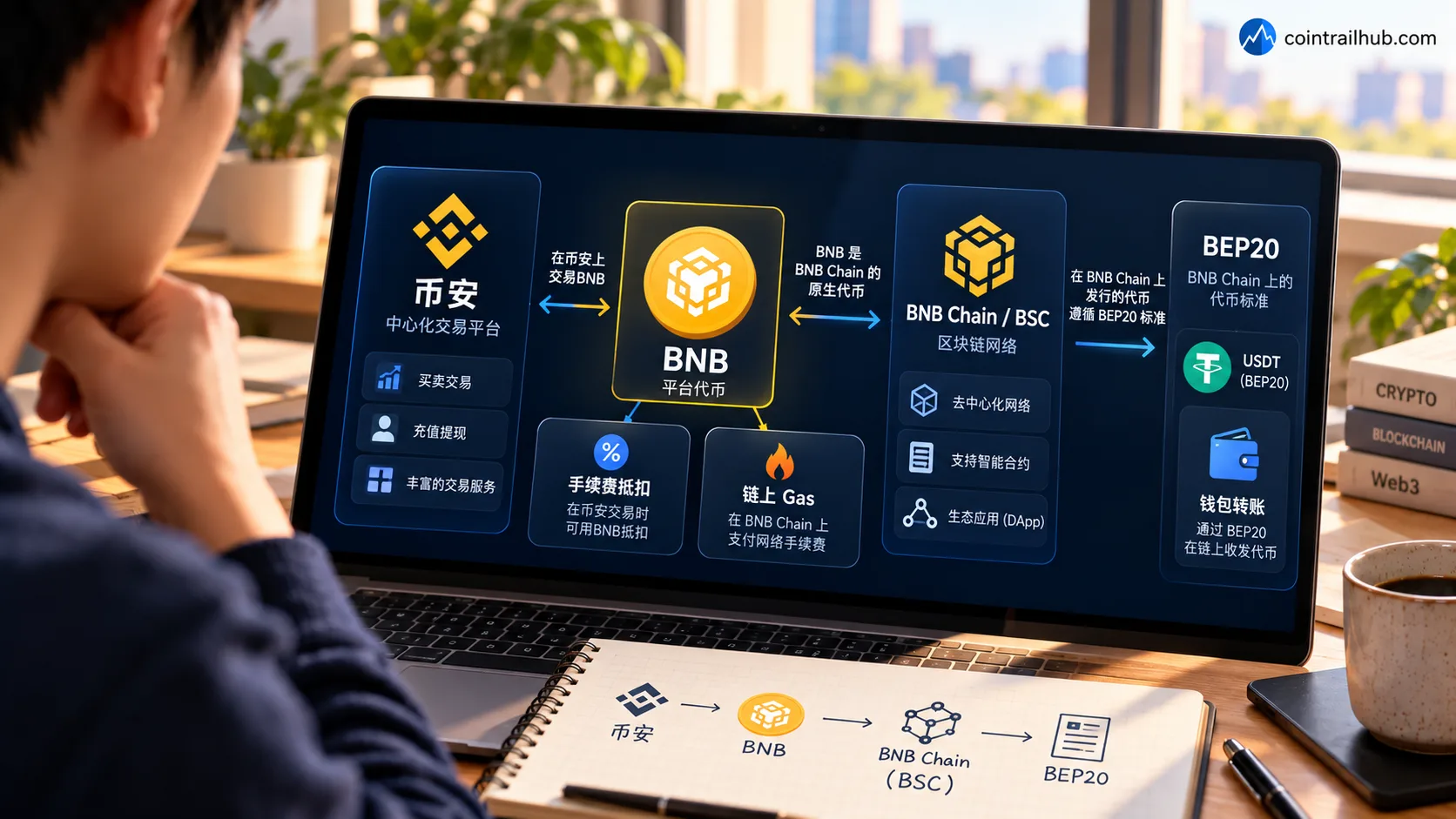
Figure 1: The relationship between Binance, BNB, BNB Chain, and BEP20
So you must distinguish:
Using BNB ≠ investing in BNB.
Preparing a little BNB to send some BEP20 USDT, versus holding a large amount of BNB long-term because you're bullish on the price, are two completely different things.
To go deeper on on-chain gas, see:
Can You Pay Gas with USDT on BNB Chain? BEP20 Transfers and Gas, Tested (2026)
What is BNB used for? Fees, gas, staking, and Launchpool
Whether BNB is worth buying depends first on whether you'll actually use it, not on a price forecast.
BNB's main uses for ordinary users are:
| Use | Where it happens | How it works | Importance for beginners |
|---|---|---|---|
| Fee offset | Binance account | Use BNB to pay some trading fees | Practical for high-frequency traders |
| On-chain gas | BNB Chain | Pay gas for transfers, swaps, and contract calls | Needed if you use this chain |
| Earn / staking | Platform or on-chain | Hold or stake BNB for rewards | Not essential |
| Launchpool / Megadrop etc. | Binance events | Stake or hold BNB per event rules | Returns are not fixed |
| Payments & ecosystem use | Binance Pay, on-chain apps, etc. | Pay, transfer, or participate in the ecosystem | Depends on your needs |
The most important thing here is separating two kinds of use.
Deterministic use
Fees and gas are relatively clear needs.
As soon as you actually trade or do on-chain operations, you'll know how much BNB you need.
Non-deterministic returns
Staking, Earn, Launchpool, and new-token rewards are different.
Yields, event rules, and new-token prices can all change, so you shouldn't simply treat it as:
Buy BNB = steadily earn returns.
If you mainly want it for fees and gas, prepare what you need; if you mainly want staking yield or price appreciation, that's already an investment decision.
How much can buying BNB save? Calculated by monthly volume
Fee discounts are calculable, but BNB's price swings can't be known in advance — so you must weigh "how much I save" against "how much volatility I take on" together.
Per the account page recorded on August 14, 2026:
| Fee type | Discount with BNB | Example |
|---|---|---|
| Spot / margin trading fees | 25% | 0.10% → about 0.075% |
| Futures trading fees | 10% | Offset from the base fee per the corresponding rule |
Different regions, VIP tiers, products, and account states may differ — always go by what your account actually shows.
How much does the BNB fee offset actually save?
The following assumes:
- a base spot fee of 0.10%;
- no VIP tier calculated;
- no referral rebate calculated;
- only the 25% BNB fee offset.
| Monthly spot volume | Base fee (approx.) | BNB offset saves (approx.) | Theoretical yearly saving | Meaning for ordinary users |
|---|---|---|---|---|
| 5,000 USDT | 5 USDT | 1.25 USDT | 15 USDT | Very small benefit |
| 20,000 USDT | 20 USDT | 5 USDT | 60 USDT | Worth preparing a little |
| 100,000 USDT | 100 USDT | 25 USDT | 300 USDT | Starts to matter |
| 500,000 USDT | 500 USDT | 125 USDT | 1,500 USDT | Manage your BNB balance seriously |

Figure 2: BNB fee savings vs. holding-price volatility
How should you actually calculate it?
Many people's first reaction to "25% discount" is:
So should I buy more BNB?
Not necessarily.
What you should actually compare is:
How much you save in fees over a year vs. how much BNB you'd need to hold on average to pay those fees, and that BNB's price swings.
For example:
Your base fees are about 100 USDT a month, so in theory the BNB offset saves about 25 USDT.
But you don't need to sit on 100 USDT worth of BNB at all times — you can top up as fees actually get charged.
What actually takes on the price risk is:
the BNB balance you hold long-term on average in your account.
If you only save a dozen dollars a year, but hold several hundred dollars of BNB long-term just for that discount, the fee benefit may not be the most important factor.
A simple rule of thumb
Write your own situation as:
Yearly fee savings ÷ average BNB holding amount
For example:
Saving 60 USDT a year while holding 100 USDT of BNB on average.
Then the fee benefit is clearly meaningful relative to that balance.
But if:
you only save 15 USDT a year while sitting on 500 USDT of BNB long-term,
then the price volatility you're taking on already far exceeds the fees themselves.
Don't grow a volatile crypto position just to save a small amount of fees.
To learn how BNB offsets, the BN522 rebate, and VIP tiers stack together, see:
How to Save on Binance Fees? BNB Discount + BN522 Rebate Stacked, How Much You Save in 2026
How is BNB staking? Earn, Staking, and Launchpool compared
BNB's staking and event returns aren't standalone returns — at heart they still rest on you first holding BNB.
| Method | Where the return comes from | Main risk | How to view it |
|---|---|---|---|
| Binance Earn | Platform product returns | Yield changes, BNB price swings | Suits people who already hold BNB |
| On-chain Staking | Network validation rewards | Unlock rules, validator risk, price swings | Adds wallet-operation risk on top |
| Launchpool | New-token rewards | Reward value is uncertain | Don't pile in just for an event |
| Megadrop etc. | Event-rule rewards | Condition and reward-value changes | Look at each round's rules separately |
| HODLer-type rewards | Distributed per platform rules | Project price and rule changes | A bonus, not the main point |
The easiest thing to misread is "annualized yield."
For example, a page showing some yield doesn't mean your dollar (or fiat) assets necessarily grow by that same percentage.
Because your total return is roughly:
BNB's own price change + BNB quantity growth + event reward value
Say you earn 3% more BNB through staking in a year, but BNB's price drops 30% over the same period — your dollar-denominated assets can still shrink noticeably.
And the reverse holds too.
So:
Staking rewards can grow your BNB quantity, but they can't remove BNB's price risk.
Who is better suited to participate?
The more sensible order is:
Already willing to hold BNB → then consider Earn / Staking / Launchpool
rather than:
See a yield → buy a lot of BNB just for the return
Is BNB worth buying? Decide directly by 5 user types
There's no universal "worth buying" or "not worth buying" for BNB — the most practical approach is to see which user type you belong to.
| Your situation | Do you need to buy BNB? | How to size it |
|---|---|---|
| Trade on Binance often | Worth considering | Prepare per your actual fee needs |
| Use BNB Chain often | A small amount | Top up as gas is consumed |
| Want to join Earn / Launchpool long-term | Depends on whether you're already bullish on BNB | Don't pile in just for events |
| Only do P2P or occasional buys | Usually unnecessary | The fee benefit is limited |
| Simply bullish on BNB rising | That's an investment | Assess position and risk separately |
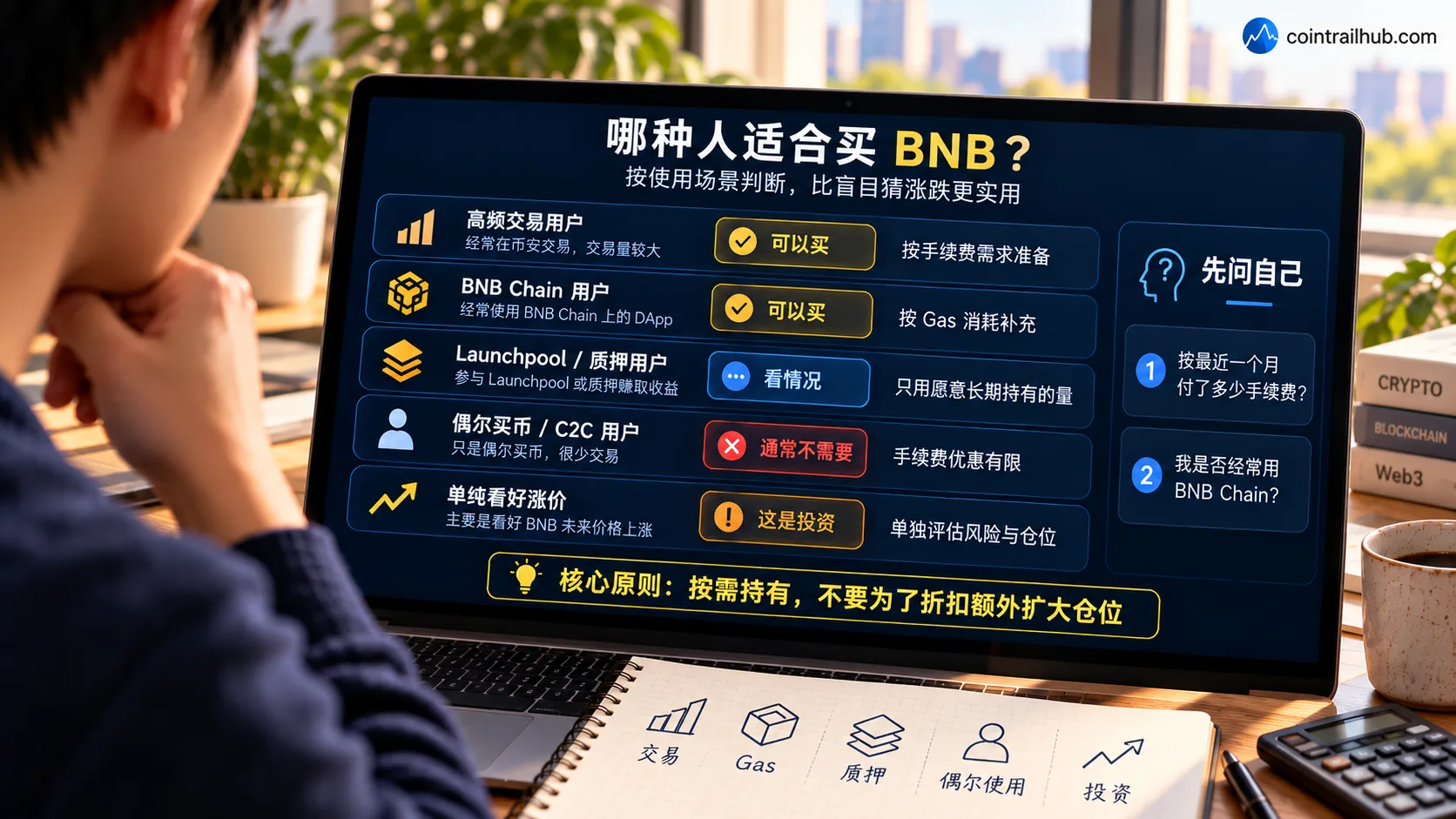
Figure 3: Who should buy BNB? A 5-type user decision diagram
Case one: you trade on Binance often
If your monthly volume is high, the BNB offset produces real, ongoing savings.
In this case, holding a small amount of BNB has a clear purpose.
Case two: you use BNB Chain often
If you:
- transfer BEP20 USDT;
- use DApps like PancakeSwap;
- do on-chain swaps;
- interact with smart contracts;
then your wallet needs BNB to pay gas.
But for ordinary transfer users, there's no need to hold a large amount of BNB for this.
Case three: you want to join Launchpool or staking
First ask yourself:
If there were no Launchpool, would I still be willing to hold BNB?
If the answer is no, it means you don't actually want to invest in BNB — you're just drawn in by short-term rewards.
Case four: you only buy occasionally
If your yearly fees are already small, even a 25% discount saves very little in absolute terms.
There's no need to add BNB volatility just to save a few dollars.
Case five: you simply think BNB will rise
Then stop using "fee discount" to convince yourself.
This is a pure investment decision, and you need to consider:
- BNB Chain activity;
- Binance ecosystem growth;
- regulatory risk;
- market cycles;
- BNB supply-demand changes;
- overall crypto market conditions.
Core principle: for beginners who only want the fee and gas functions, BNB is better held on an as-needed basis, not expanded into a bigger position just because "there's a discount."
What are BNB's risks?
1. BNB price volatility
This is the most direct risk.
A fee discount may save you a few dozen dollars a year, but one significant BNB decline can exceed that benefit.
So:
Fee discount ≠ risk-free return.
2. Binance ecosystem association risk
BNB is now the native asset of BNB Chain, not just an "exchange platform token" in the early sense.
But Binance is still one of BNB's most important use cases, liquidity sources, and brand associations.
So if Binance experiences a major regulatory, operational, market, or brand event, BNB's demand and market sentiment may also be affected.
3. BNB Chain ecosystem competition
BNB Chain competes with Ethereum, Solana, Base, and other smart-contract ecosystems for users, developers, capital, and applications.
If ecosystem activity declines, BNB's use demand may also be affected.
4. On-chain operation risk
Using BNB Chain also means facing:
- seed-phrase leaks;
- fake wallets;
- malicious approvals;
- fake tokens;
- phishing DApps;
- cross-chain bridge risk;
- wrong networks.
These risks are separate from BNB's own price movements.
How to choose between BNB, USDT, BTC, and ETH?
BNB, USDT, BTC, and ETH aren't the same kind of asset — compare by use case, not by asking "which is best."
| Comparison | BNB | USDT | BTC | ETH |
|---|---|---|---|---|
| Core attribute | BNB Chain native token | Stablecoin | Crypto asset / store of value | Smart-contract network native asset |
| Price volatility | Higher | Targets the dollar | Higher | Higher |
| Main use | Fees, gas, ecosystem events | Trading quote, fund transfer | Holding, transferring value | Gas, DeFi, on-chain apps |
| Suited as gas? | Yes on BNB Chain | Usually not | BTC network has its own fee mechanism | Yes on Ethereum |
| Suited for | Binance / BNB Chain users | People needing a stable quote asset | People focused on BTC's long-term value | Ethereum ecosystem users |
BNB vs USDT
USDT's goal is to stay close to $1.
BNB rises and falls.
So:
- Want stable pricing and to wait before buying: USDT fits the use case better;
- Want to pay BNB Chain gas or Binance fees: BNB fits the use case better.
They're not substitutes.
BNB vs BTC
BTC's main value logic is scarcity, network security, and decentralized store of value.
BNB depends more on the use demand of BNB Chain and the Binance ecosystem.
If you have no BNB use case at all, "buying some BNB on the side because I'm buying BTC" has no necessary logic.
BNB vs ETH
Both ETH and BNB can be used for smart-contract network gas, but the ecosystems behind them are different.
If your main activity is in the Ethereum ecosystem, you need ETH;
if your main activity is on BNB Chain, you need BNB.
It's not that one is absolutely better — it's which chain you operate on.
FAQ
What's the difference between BNB and BSC?
BNB is a token; BSC is a blockchain network.
Simply put:
- BNB = the asset used to pay gas;
- BSC = the network where transactions happen;
- BEP20 = a common token standard on BSC.
The names "BNB Smart Chain" or "BNB Chain" are now more commonly used.
Can I buy BNB? How?
You can buy it on trading platforms that support BNB.
On Binance, the common way is:
- prepare a trading asset like USDT;
- go to spot trading;
- find BNB/USDT;
- buy BNB with a market or limit order.
If you only need it for fees or gas, there's no need to grow your position because of a single purchase.
Is BNB worth buying?
It depends on the use case.
For fees and gas: holding a small amount as-needed has a clear purpose.
For staking yield: it's only more sensible if you're already willing to hold BNB.
For price appreciation: that's an investment, and you take on price and ecosystem risk separately.
Is BNB suitable for long-term holding?
There's no universal answer.
If you use Binance and BNB Chain long-term, keeping some BNB as a tool asset has practical use.
If "long-term holding" means you believe BNB must rise, you need to reassess — no crypto asset is guaranteed to rise.
How much BNB is enough?
Work backward from your use:
- Ordinary on-chain transfers only: prepare a little gas;
- Frequent swaps and DApp operations: top up by actual gas use;
- Fee offsets: prepare per recent fee consumption;
- Staking / Launchpool: only use funds you're already willing to expose to price swings.
There's no fixed BNB amount that suits everyone.
How do I turn on the BNB fee offset?
In the fee / BNB-use settings of the Binance App or website, enable the "Use BNB to pay fees" option.
Entry points may differ across versions, regions, and accounts — always go by your current account page.
Can the BNB fee discount and the referral-code rebate stack?
Where the corresponding rules allow, both benefits may apply at once, but the calculation isn't a simple addition.
For example, using:
- base fee: 0.10%
- BNB offset: 25%
- rebate ratio: 20%
a simple illustration is:
0.10% × 75% × 80% ≈ 0.06%
The actual rate still depends on your account's VIP tier, trading products, event rules, and the real-time page.
For the full calculation, see:
How to Save on Binance Fees? BNB Discount + BN522 Rebate Stacked, How Much You Save in 2026
Does BNB's burn mechanism guarantee the price will rise?
No.
BNB has an Auto-Burn and on-chain burn mechanism. Reducing supply can be one factor influencing supply and demand, but the price is still affected by:
- market conditions;
- BNB Chain use demand;
- Binance ecosystem growth;
- regulatory changes;
- investor sentiment;
- the macro market environment
and many other factors.
The burn mechanism can reduce supply, but it can't guarantee the price only goes up.[3]
Can BNB go to zero?
No crypto asset can promise it will absolutely never go to zero.
BNB currently has use cases like fees, gas, and ecosystem events, but real utility doesn't mean the price has no risk.
When evaluating BNB, you should also consider:
- whether BNB Chain keeps being used;
- whether the Binance ecosystem stays competitive;
- the regulatory environment;
- market liquidity;
- the overall crypto industry cycle.
Should a beginner buy BTC or BNB first?
If you have no clear BNB use case, there's no need to buy BNB just because you registered on Binance.
BNB is better suited as:
an asset held on an as-needed basis when you have a clear fee-offset, gas, or ecosystem use case.
BTC is a completely different investment logic, and the two shouldn't be forced into an either/or just because both are crypto assets.
One-sentence summary
BNB has real utility, but "useful" doesn't mean "you should hold a lot of it."
If you mainly want it for:
- Binance fee offsets;
- BNB Chain gas;
the simplest strategy is prepare it as needed.
If you want it for:
- staking;
- Launchpool;
- long-term price appreciation;
then it's no longer just a "tool need" — it's an investment decision that takes on BNB's price, ecosystem, and regulatory risk.
Data verification notes
The key facts in this article were verified on 2026-10-05 against BNB Chain official documentation, Binance Academy, and Binance account pages, item by item:
- BNB's uses: BNB is the native token of BNB Chain, usable for on-chain gas, some Binance fee offsets, and events like Launchpool. Source: Binance Academy "What Is BNB", BNB Chain official documentation.
- Fee-offset ratios: on 2026-08-14 the Binance App account page showed a 25% spot/margin trading fee offset and a 10% USDⓈ-M futures fee offset. Source: Binance App "Use BNB" account-page records.
- Burn mechanism: BNB uses an Auto-Burn and on-chain burn mechanism to reduce supply, but reduced supply does not guarantee a price increase. Source: BNB Chain official documentation.
Related reading
- How to Save on Binance Fees? BNB Discount + BN522 Rebate Stacked, How Much You Save in 2026 — BNB offset, rebate, and VIP rate calculation
- Can You Pay Gas with USDT on BNB Chain? BEP20 Transfers and Gas, Tested (2026) — BNB Chain gas and BEP20 transfers
- Is Binance Safe? 2026 Real-Account Fees vs OKX Compared — Binance platform risk and security mechanisms
- Binance or OKX? How Beginners Should Choose — 5 Dimensions, Real-Tested — choosing a trading platform
- Crypto DCA: How to Buy? The Stress-Free Way to Accumulate BTC/ETH (2026) — if you care more about long-term holding of mainstream crypto
Disclaimer
This article is only for educational explanation of BNB's use, fee mechanism, and related risks, and does not constitute investment advice, financial advice, or trading advice.
Crypto asset prices are volatile. BNB also carries Binance ecosystem association, BNB Chain competition, regulatory, market, and on-chain security risks.
Whether to buy and how much BNB to hold should be decided independently based on your own use case, risk tolerance, and the laws and regulations of your location.
The Binance, BNB Chain, USDT, BTC, and ETH mentioned in this article are only used to explain product and asset differences, and do not constitute a guarantee of their price, safety, or future returns.
- 2026-10-17UpdateAdded evidence-chain superscripts and the "Data verification notes" section.
- 2026-10-05UpdateInitial release; fee-offset ratios cite 2026-08-14 account tests and Binance's public rules.
See ourEditorial Policy and the correction process in ourCorrections Policy.
The CoinTrailHub editorial team focuses on crypto education for beginners, exchange security and P2P trading risk. This article is compiled from official sources and public data, reviewed by humans, and strives for accuracy but is not investment advice.
Last updated:2026-10-05 · Content reviewed by humans · Learn more
© 2026 CoinTrailHub · Original content. Reproduction or rewriting without permission is prohibited.