
Are on-chain RWA assets worth investing in? My real experience buying NVDAon
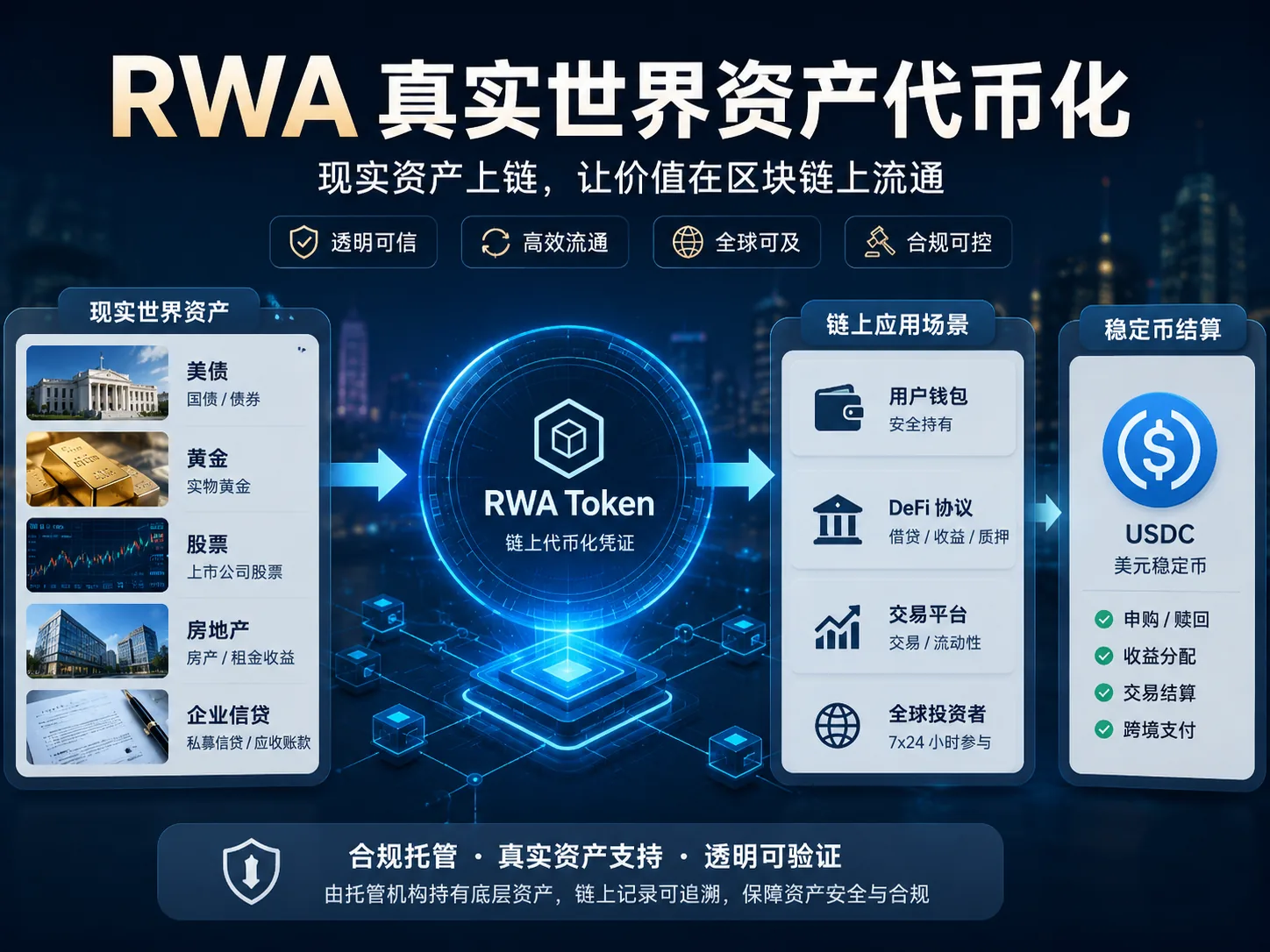
Table of contents

Binance new user rewards
20% trading fee rebate
Official Binance registration. Complete identity verification (KYC) to trade and withdraw.
If you have recently looked at USDC, on-chain US stocks or tokenized US Treasuries, you should easily have seen one word:
RWA.
This word is showing up more and more often.
Some people call it "real-world assets on-chain," and others call it the entry point for traditional finance into Crypto.
It sounds full of imagination.
But for beginners, this is also exactly where the misunderstanding is easiest.
Many people first seeing RWA will instinctively think:
Are houses, gold, US stocks and US Treasuries being put directly onto the blockchain?
Actually, no.
The blockchain cannot hold a building on its own, cannot hold a stock on its own, and cannot truly stuff a Treasury bond into your wallet.
A more accurate understanding of RWA is:
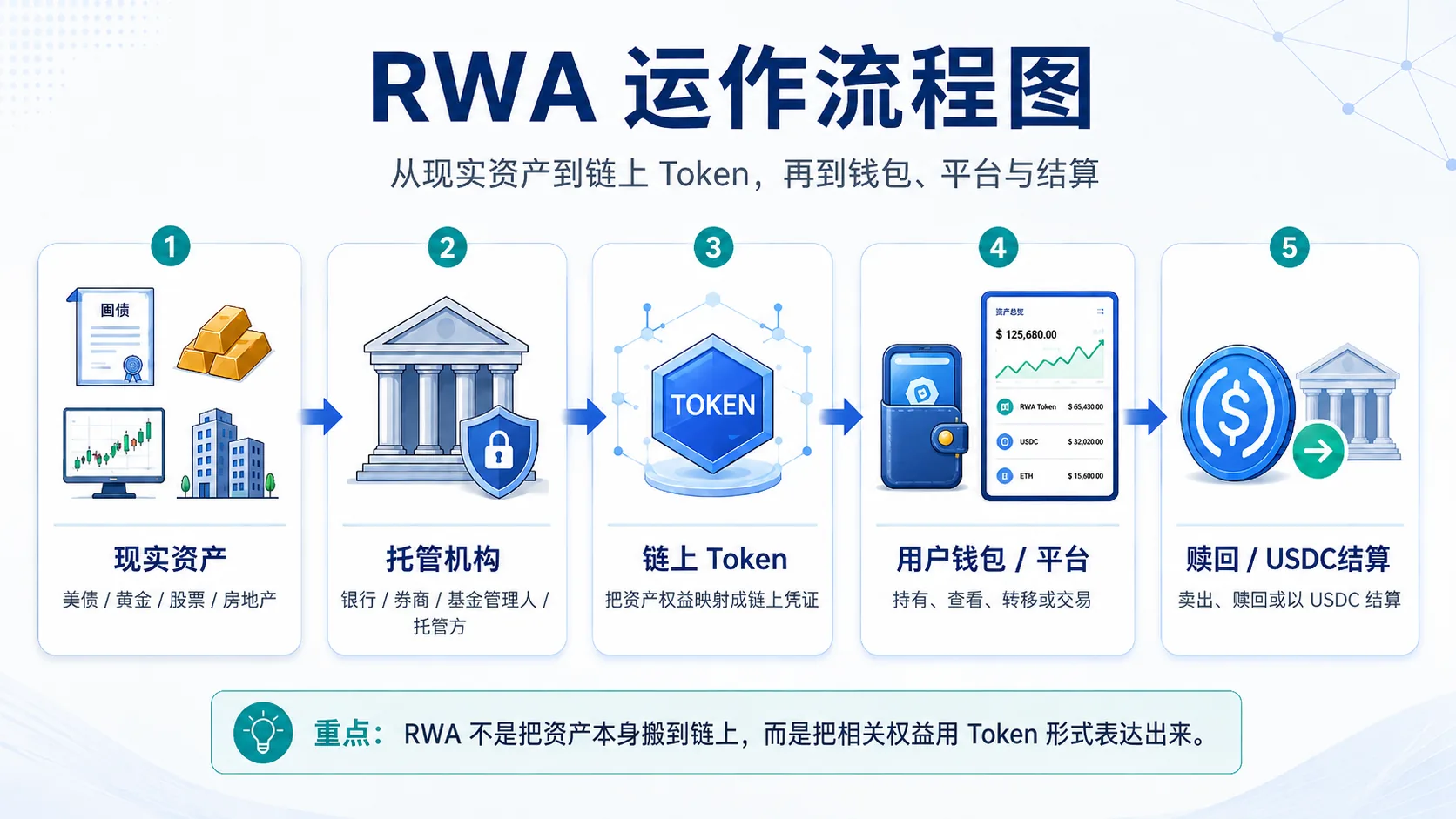
Expressing the rights of real-world assets through on-chain tokens or digital certificates.
In other words, what you see on-chain is not the house itself, nor the gold itself, but some right, share, claim, certificate or settlement record related to these assets.
This is also the point I think beginners most need to get clear first.
When you see an RWA token, don't immediately understand it as:
"I own this real-world asset."
You should first ask:
What is behind it? Who issued it? Who custodies it? Can I redeem it? Who is responsible if something goes wrong?
I myself only really realized that RWA is not as simple as imagined when looking at USDC, Binance US stocks and tokenized US Treasuries.
Because in those pages, what keeps reappearing is not "how much it went up," but:
Custody, redemption, settlement, KYC, regional restrictions.
These words look ordinary, but they are the core of RWA.
So this article does not talk about "whether RWA is an opportunity," nor does it encourage you to jump in right away.
Let's first get the most basic questions clear:
What exactly is RWA?
Why does it often appear together with USDC, on-chain US stocks and tokenized US Treasuries?
Why does it sound like a real asset, but still carries a lot of risk?
Important reminder: This article is a summary of Crypto fundamentals and personal learning experience, and does not constitute any investment, financial or trading advice. RWA, tokenized US Treasuries, on-chain US stocks, tokenized gold and similar products involve issuer, custody, regulatory, KYC, regional restriction, liquidity and market risks. Before actually acting, follow the project's official website, platform rules and local regulations.
First, understand RWA in one sentence
RWA is not moving houses, Treasuries or gold onto the blockchain.
It is more like expressing the rights of real-world assets through on-chain tokens or digital certificates.
So when beginners look at RWA, they cannot only look at the two words "real asset"; they must look more carefully at:
What asset is behind it?
Who issued it?
Who custodies it?
Can it be redeemed?
Can your region use it?
These questions matter more than "is it a hot track."
Which materials did this article reference?
Information verification time for this article: June 20, 2026.
RWA changes quickly, and custody arrangements, redemption rules, KYC requirements and regional restrictions may change between projects.
Before writing this article, I mainly looked at a few directions:
Chainlink's Real-World Assets explanation page, used to confirm the basic definition of RWA.
RWA.xyz's RWA market data page, used to observe common asset categories in the RWA market.
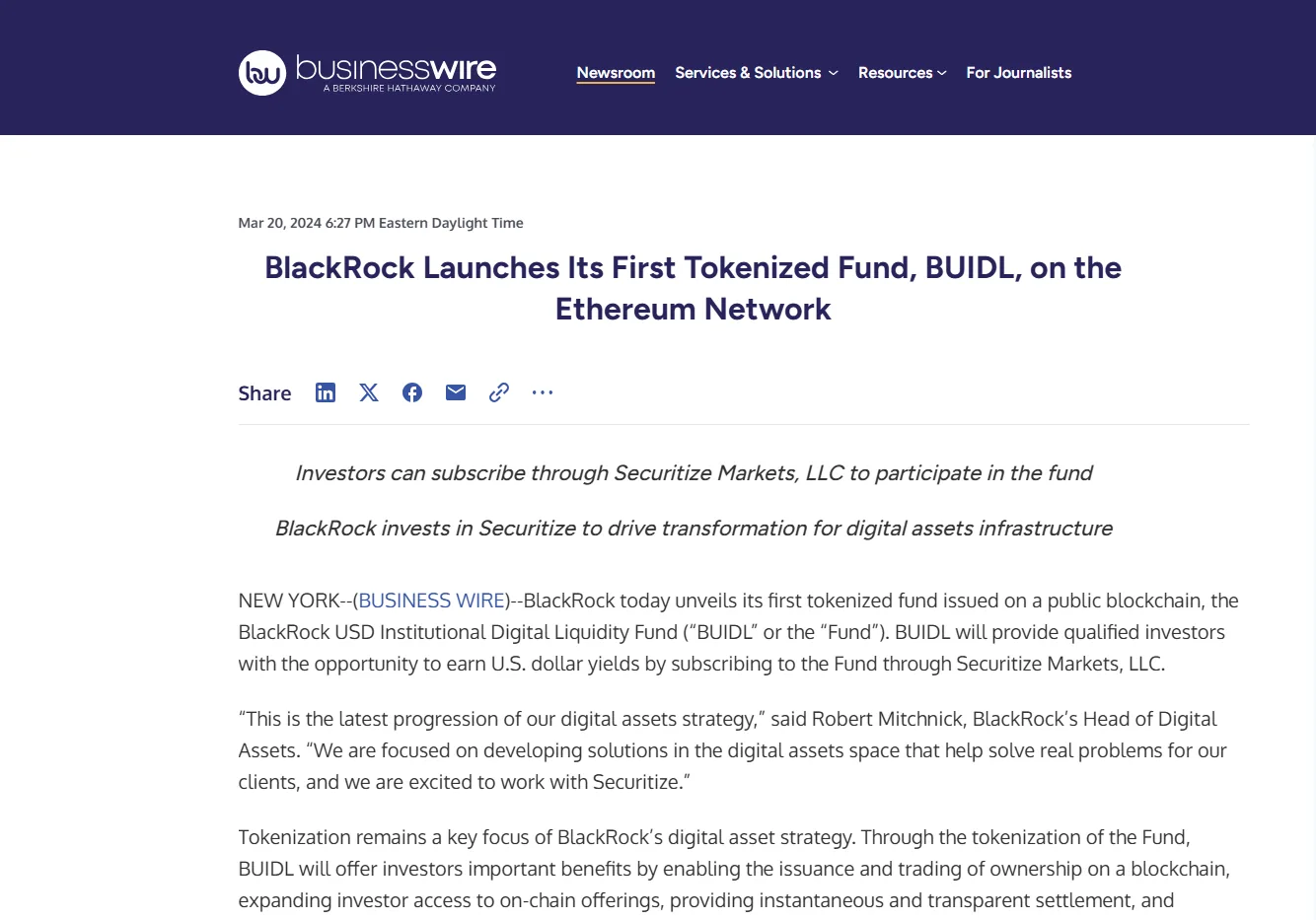
BusinessWire's press release on BlackRock BUIDL, used to understand how tokenized fund products usually describe public-chain issuance, subscription and the role of service providers like Securitize Markets.
Binance's US Stocks & ETFs related page, used to observe the actual use of USDC in platform financial scenarios like stocks and ETFs.
After reading these materials, my biggest feeling is:
RWA cannot be understood only at the "Token" layer; you have to look at the off-chain assets and platform rules.
If you only look at the page writing "real assets," "institutional participation" and "on-chain finance," it is easy to see a complex product as too simple.
What exactly is RWA?
RWA is short for Real World Assets.
In Chinese it is usually called:
真实世界资产 (real-world assets).
In the Crypto context, RWA usually means:
Representing the rights of real-world assets through tokens on the blockchain.
Real-world assets can be of many kinds.
For example:
- US Treasuries
- Money market funds
- Gold
- Stocks
- Real estate
- Bonds
- Private credit
- Accounts receivable
- Commodities
- Art
Beginners don't need to memorize all of them at first.
You can first understand it this way:
As long as what is behind it connects to assets or financial rights in the real world, rather than being a token purely issued on-chain, it may fall within the RWA range.
For example, a tokenized US Treasury product.
Seeing a token on-chain does not mean the Treasury actually lies in your wallet.
More accurately, it may represent a fund share, some kind of claim arrangement, or an asset-right certificate recognized by a platform.
So the most important thing about RWA is not "whether it is an on-chain token."
It is:
What the real-world right behind this token actually is.
Why shouldn't you understand RWA as "assets directly on-chain"?
The phrase "assets on-chain" easily misleads beginners.
Because it sounds like real assets have really entered the blockchain.
But what the blockchain can record is digital information.
It cannot hold a building on its own.
It cannot confirm on its own whether a gold bar really exists.
It cannot hold a company's stock for you on its own.
So the truly complex part of RWA is not on-chain, but off-chain.
For example, someone says:
"This token represents a house."
Don't immediately understand it as you owning that house.
You should keep asking:
Where is the house?
Whose name is on the property deed?
Does the token holder have legal rights?
How are the rent payments split?
Can you exit?
What happens if the platform collapses?
What happens if the property is in dispute?
These questions matter more than "which chain this token is on."
On-chain records can improve transparency.
But off-chain rights determine what you actually own.
Why has RWA drawn more and more attention in recent years?
RWA is drawing attention not because it suddenly became new.
It is because the Crypto market is slowly expanding from "only trading coins" to "connecting real assets."
Early on, many people came to Crypto mainly around BTC, ETH, exchanges, wallets, DeFi, NFTs and stablecoins.
But as stablecoins, on-chain payments, institutional custody and compliance services gradually matured, more and more people began to wonder:
Can real-world assets be represented, traded or settled in an on-chain way?
This is the background for RWA's attention.
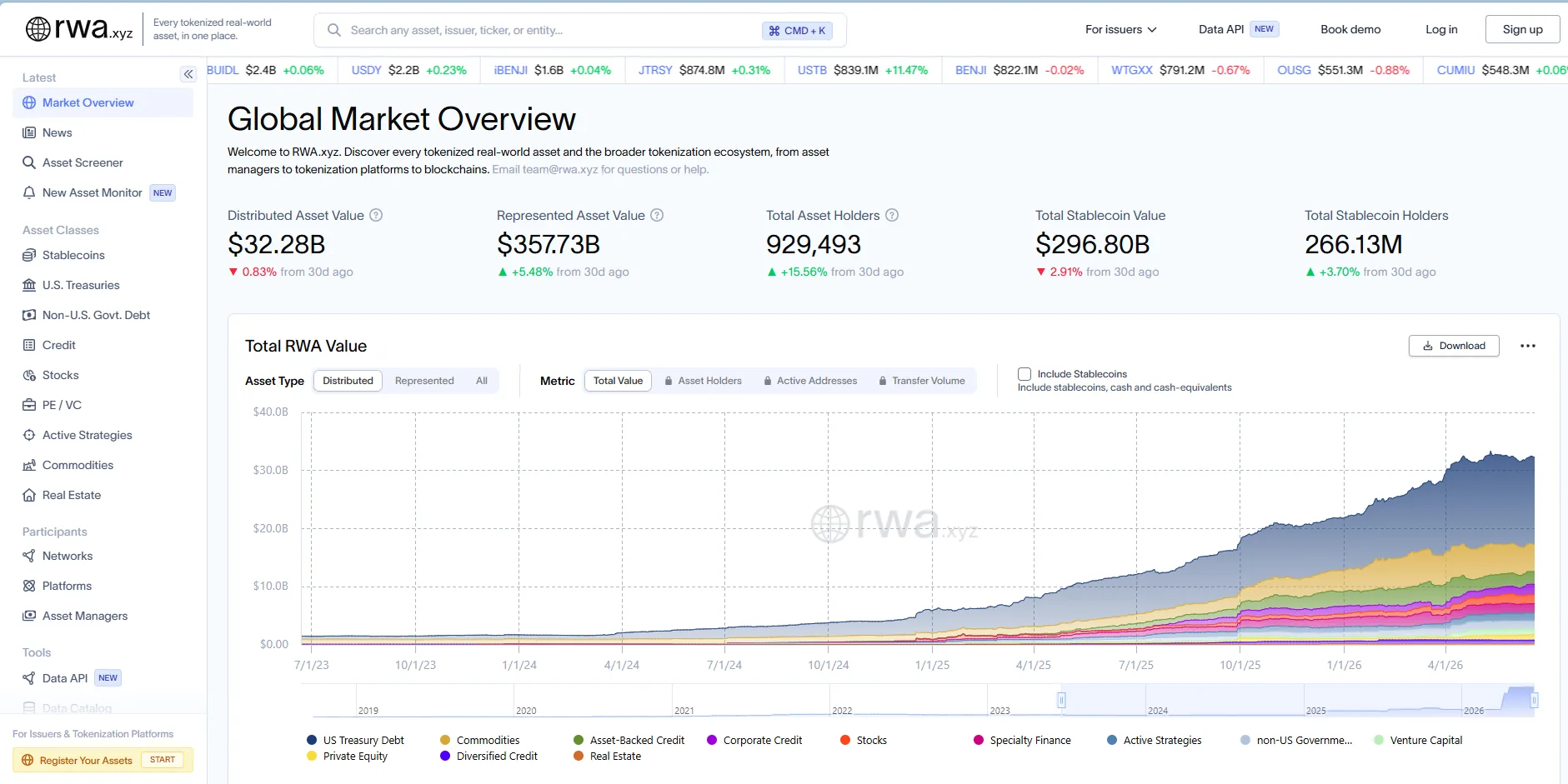
It wants to connect two sides.
One side is the assets in traditional finance, such as Treasuries, stocks, gold, funds and real estate.
The other side is the wallets, stablecoins, smart contracts and on-chain settlement in the blockchain.
So RWA looks like a bridge between traditional finance and Crypto.
But this bridge is not simple.
On one side it connects on-chain efficiency, and on the other it connects the law, custody, audit, redemption and regulation of the real world.
This is also why RWA cannot be judged only by "does it have potential."
You should instead ask:
Who actually built this bridge? Where is the asset under the bridge? After crossing the bridge, can you come back?
What are the common kinds of RWA?
RWA is not a single product, but a category of ways to put assets on-chain.
Beginners can start with a few common kinds.
| RWA type | What beginners should focus on |
|---|---|
| Tokenized US Treasuries | Whether you buy the Treasury itself, or a token representing Treasury-related rights |
| Tokenized gold | Whether the gold really exists, where it is, who custodies it, whether physical gold can be redeemed |
| On-chain US stocks / tokenized stocks | Whether there is real stock backing, custodian, dividends, voting rights, redemption and regional restrictions |
| Tokenized real estate | Property registration, regional law, rent distribution, taxes, valuation and exit mechanism |
| Private credit and accounts receivable | Who the borrower is, default rate, collateral, risk control and bad-debt handling |
Tokenized US Treasuries
This is currently the easiest type of RWA to understand.
It is usually related to short-term US Treasuries, money market funds or similar dollar assets.
Many people pay attention to it because it looks closer to traditional finance than ordinary altcoins.
But you should note:
Tokenized US Treasuries do not equal directly buying a US Treasury bond.
It may be a fund share, or a tokenized right issued by some platform.
What you need to look at is the specific product structure, not just the name.
When you see "Treasury RWA," don't first ask how much the return is.
First ask:
Am I buying the Treasury itself, or a token representing Treasury-related rights?
Tokenized gold
Tokenized gold is relatively easy to understand.
It usually claims to be backed by physical gold.
For example, if you have seen PAXG or XAUT before, you have already been exposed to this type of asset.
But tokenized gold is not entirely risk-free either.
You need to look at whether the gold really exists, where it is stored, who is responsible for custody, whether there is third-party proof, and whether physical gold can be redeemed.
Gold itself has price volatility.
After tokenization, it adds issuer and custody risk.
On-chain US stocks and tokenized stocks
This type of product is very attractive to Chinese-speaking beginners.
Because it connects familiar stocks like Apple, Tesla and Nvidia with USDC, wallets and trading platforms in Crypto.
But you must be careful here.
Seeing "on-chain US stocks" or "tokenized stocks" does not mean it is exactly the same as buying stocks through a traditional broker.
You need to look clearly at:
Does it have real stock backing?
Who is the underlying broker or custodian?
Are there dividends?
Are there voting rights?
Can it be redeemed?
Are there trading-hour restrictions?
Does it support your region?
Binance US stocks and ETF products also involve USDC settlement and platform rules.
So it is not ordinary spot trading, nor can it be summed up as just "buying US stocks."
Tokenized real estate
This type of product sounds the most intuitive, but is usually also the most complex.
Because real estate is not a simple number.
It involves property registration, regional law, rent distribution, property management, taxes, valuation and exit mechanisms.
Don't feel safe just because you see "real estate on-chain."
The more real the property, the more off-chain problems there are.
If token holders do not have clear legal rights, "real estate on-chain" may just be a nice-sounding story.
Private credit and accounts receivable
This type of RWA leans more toward a specialized financial field.
Simply put, it turns loans, corporate financing, trade receivables and other assets into on-chain products.
This type of product is harder for beginners to judge.
Because you need to understand who the borrower is, what the default rate is, what the collateral is, who does risk control, and how bad debt is handled.
If you can't understand these, I don't suggest beginners participate directly.
What is the relationship between RWA and USDC?
RWA often appears together with USDC.
The reason is simple:
Many RWA products need an on-chain dollar tool.
And USDC happens to often play this role.
For example, when you buy a tokenized US Treasury product, the platform may support subscribing with USDC.
After selling or redeeming, it may also settle in USDC.
In some on-chain US stock, tokenized asset or platform financial products, USDC may also serve as the pricing, swap or settlement asset.
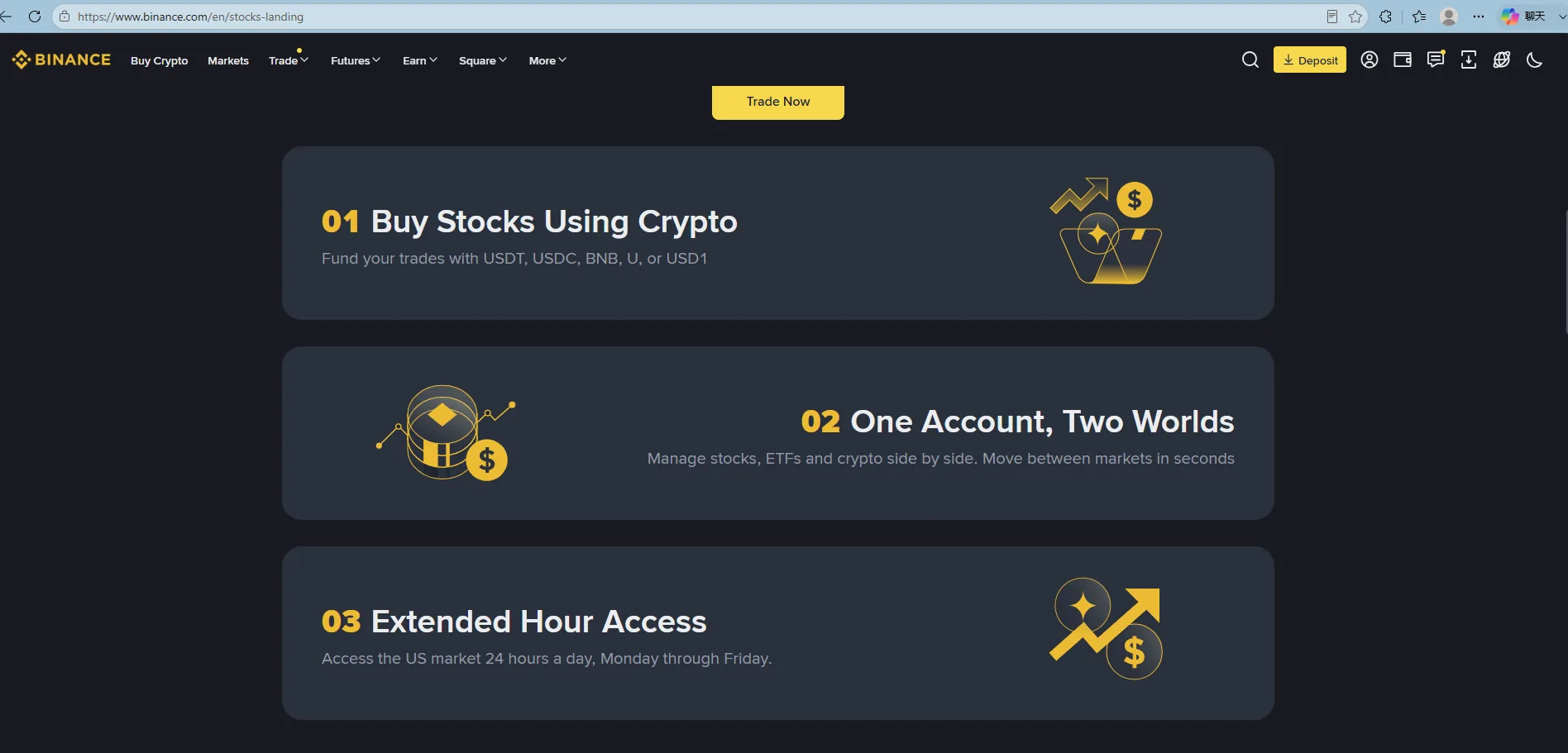
This is also why I suggest beginners understand USDC first before understanding RWA.
Because later you will often see these scenarios:
Buying with USDC.
Settling with USDC.
Receiving USDC after selling.
USDC entering a funding account.
USDC transferring between different networks.
If you don't understand USDC, network selection or wallet addresses, looking directly at RWA will easily get confusing.
You can start with this article: What is the difference between USDT and USDC? Which is safer and how to choose (2026).
Beginners can understand the learning order as:
First stablecoins, then wallets, then on-chain assets.
Don't jump straight into complex products.
What is the relationship between RWA, on-chain US stocks and tokenized US Treasuries?
These words are easy to mix up.
You can understand it this way:
RWA is the broad category.
On-chain US stocks, tokenized US Treasuries and tokenized gold can all be considered specific directions under RWA.
Tokenized US Treasuries focus on Treasury or money-market-fund related rights.
On-chain US stocks focus on stock-related rights.
Tokenized gold focuses on physical gold custody and redemption rules.
They may all use blockchain tokens as their form of expression.
But the underlying asset, legal rights, redemption rules and platform restrictions are completely different.
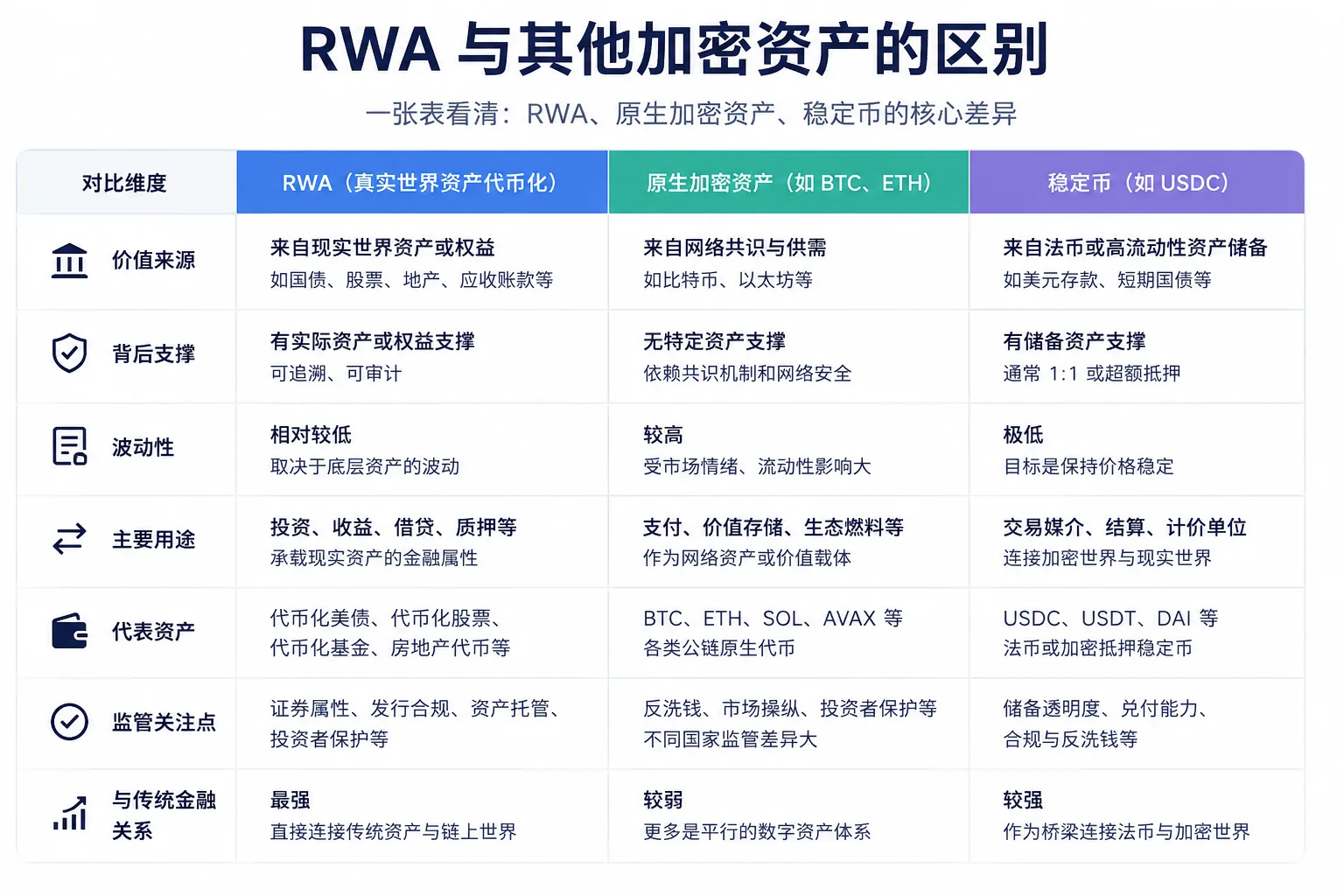
So when you see this type of product, don't look only at the name.
Especially "on-chain US stocks."
What you really need to ask is:
What right am I actually buying?
Is it the stock itself?
Is it a stock-related certificate?
Is it an internal platform record?
Are there dividends and voting rights?
Who is responsible for custody?
Who is responsible if something goes wrong?
Before these questions are clear, don't treat it as a stock in a traditional broker.
What should a beginner look at first with RWA?
When I first came across this type of product, I would also first look at the returns, asset size and institutional names written on the page.
Later I found that looking this way easily gets you led along.
Because RWA pages are usually made to look very "proper."
They write real assets, institutional participation, on-chain finance, compliance, transparency.
These words are of course meaningful.
But they cannot replace the most basic questions.
When I look at an RWA project now, I usually first ask a very simple question:
What asset is actually behind it?
Is it Treasuries?
Is it gold?
Is it stock?
Is it a fund share?
Or an internal rights certificate of some platform?
If this question can't be answered clearly, no matter how much "on-chain," "institutional" or "compliance" is written later, I will set it aside first.
The second question is:
Who is responsible in the middle?
RWA does not run entirely on on-chain rules like BTC.
Behind it there are usually issuers, custodians, fund managers, brokers, banks, platforms or other service providers.
So you cannot only look at the token.
You also need to look at whether the off-chain arrangement behind the token is reliable.
The third question is:
After I buy, how do I get out?
Many beginners only care about whether they can buy, and rarely look at whether they can redeem.
But the most critical part of RWA is often the exit rules.
Who can redeem?
How long does redemption take?
Is there a minimum amount?
Is KYC required?
Can your region use it?
If these questions are unclear, I would rather not touch it.
I think what beginners fear most with RWA is not missing a project.
It is only seeing the words "real asset" without understanding what they are actually buying.
Where is the biggest risk in RWA?
Many people, when talking about risk, only think of price rises and falls.
But RWA's risk is not just price.
I think what beginners most easily overlook in RWA is not the on-chain part, but the off-chain part.
Because on-chain you can only see token transfers, contract addresses and some records.
But what actually determines whether the token has value is often that off-chain set of things:
Where is the asset?
Who custodies it?
What do the legal documents say?
Can it be redeemed?
Who is responsible if something goes wrong?
This is the core risk of RWA.
Beyond that, there is platform-rule risk.
Some products may restrict regions.
Some require KYC.
Some can only trade within the platform.
Some only allow transfers to whitelisted addresses.
Some look like on-chain assets, but when exiting you still have to go back to platform rules.
Then there is on-chain operation risk.
If you use USDC to participate in RWA, you need to consider USDC's own risk, network-selection risk, wallet-approval risk and contract risk.
So RWA is not "less risk."
It just expands the risk from simple coin-price volatility to off-chain assets, issuers, custody, law, redemption, platform and on-chain operations.
This is also why I don't suggest beginners participate in RWA with a large amount at first.
Is it suitable for a beginner to jump into RWA right away?
Not necessarily.
If you have just come to Crypto, I would rather suggest you learn first, not jump in right away.
RWA looks more "real" than altcoins.
But real assets do not mean simple.
Many RWA products are actually more complex for beginners.
Because you need to understand not only on-chain operations, but also some traditional finance concepts.
For example, fund shares, custody, redemption, securities rights, KYC, regional restrictions, liquidity and compliance rules.
If you haven't yet figured out USDT, USDC, wallet addresses, transfer networks and seed phrases, I don't suggest studying complex RWA products directly.
Read articles first.
Read the rules first.
Read the official documents first.
Learn with a small amount first.
This is more stable than jumping in right away.
RWA is better suited as an advanced learning direction for beginners, not the first stop.
The first stop is still stablecoins, exchanges, wallets and transfer security.
How should an ordinary beginner learn RWA?
I suggest following this order.
First, understand stablecoins.
Because many RWA products use USDC or USDT to buy, redeem or settle.
If you haven't understood stablecoins, looking directly at RWA will easily get you off track.
You can start with:
- What is USDT? The uses and risks of Tether (2026)
- What is the difference between USDT and USDC? Which is safer and how to choose (2026)
Then learn wallets and networks.
RWA is often related to wallets, on-chain addresses and network selection.
You at least need to know:
What a wallet address is.
What a seed phrase is.
Why transfers need to look at the network.
Why transferring to the wrong chain can be troublesome.
You can continue with:
- What is a crypto wallet? Wallet address, seed phrase and asset security (2026)
- Can you recover a transfer sent to the wrong chain? Withdrawal networks and wallet addresses (2026)
Finally, look at specific RWA products.
At the start, you don't need to look at too complex private credit, accounts receivable or non-standard assets.
Start with tokenized US Treasuries, tokenized gold and on-chain US stocks, which are easier to understand.
The point is not to jump in immediately.
It is to train yourself to see clearly:
What the asset is, who custodies it, how to redeem it, and where the restrictions are.
A line beginners can remember about RWA
When you see an RWA project, don't first ask:
Can this make money?
First ask:
What do I actually own?
If a product can't even answer this question clearly, then no matter how pretty the page, how big the institutional name, or how much on-chain data there is, none of it can replace this core question.
RWA is not automatically safe just because of the words "real asset."
What really matters is:
Whether the real asset actually exists.
Whether the legal rights are clear.
Whether the custody arrangement is trustworthy.
Whether the redemption rules are explicit.
Whether users really know what they are buying.
FAQ
What does RWA mean?
RWA is short for Real World Assets, generally called real-world assets.
In Crypto, RWA usually means representing the rights of real-world assets in blockchain token form.
Does RWA really put houses, stocks and Treasuries on-chain?
No.
The blockchain cannot directly hold houses, stocks or Treasuries.
What actually goes on-chain is the rights, certificates, shares or records related to these assets.
The underlying asset still needs off-chain custody, legal documents and platform rules to support it.
What is the relationship between RWA and USDC?
Many RWA products use stablecoins like USDC and USDT as purchase, redemption or settlement tools.
Among them, USDC is relatively common in some on-chain finance, tokenized asset and platform settlement scenarios.
Is RWA necessarily safer than ordinary Crypto?
Not necessarily.
RWA has real-asset backing, but it also has issuer, custody, legal, redemption, liquidity and regulatory risks.
It is not a risk-free asset.
Do tokenized US Treasuries equal directly buying US Treasury bonds?
Not necessarily.
Many tokenized US Treasury products may essentially be fund shares, platform certificates or some kind of claim arrangement.
You need to look at the specific product documents, not just the name.
Do on-chain US stocks equal actually owning US stocks?
Not necessarily.
Some products may represent stock-related rights, some may be internal platform certificates, and some may have no voting or dividend rights.
Be sure to look at the platform rules and asset description.
Does RWA require KYC?
Many RWA products require KYC.
Because they involve securities, funds, bonds, stocks or other regulated assets.
Requirements differ by platform and region.
Can a beginner buy RWA?
Technically, some platforms may allow participation.
But whether it is suitable depends on whether you understand the product structure, risks, redemption rules and regional restrictions.
Beginners just starting out are advised to learn first, and not rush to invest a large amount.
One last honest word
I think the RWA direction is worth learning, but not suitable for beginners to charge into right away.
It sounds like "real assets on-chain," but the truly troublesome part is often not on-chain, but off-chain: whose asset it is, where it is, who custodies it, whether it can be redeemed, and whether your region can use it.
So I would rather suggest treating RWA as advanced content.
First understand USDT, USDC, wallets and transfer networks, then look at tokenized US Treasuries, on-chain US stocks and tokenized gold.
This way you won't relax your guard the moment you see "real assets" or "institutional participation," and it will be easier to judge what you are actually buying.
Continue reading next
- What is the difference between USDT and USDC? Which is safer and how to choose (2026)
- What is USDT? The uses and risks of Tether (2026)
- What is a crypto wallet? Wallet address, seed phrase and asset security (2026)
- Can you recover a transfer sent to the wrong chain? Withdrawal networks and wallet addresses (2026)
- What is blockchain? Principle, uses and risks (2026)
Author's note
This article was organized by the CoinTrailHub editorial team, based on public information, official page content and my actual page observations, mainly for beginners new to Crypto, stablecoins, wallets and on-chain assets, helping them understand the basic logic and risk boundaries of RWA real-world asset tokenization.
We have long followed Crypto beginner onboarding, stablecoins, wallet security, trading-platform usage, RWA, on-chain US stocks and tokenized assets. The RWA, USDC, tokenized US Treasuries, on-chain US stocks and related platform features mentioned in this article may change with the market, regulation and platform rules.
This article does not constitute investment, financial or trading advice. RWA is not a risk-free asset, and stablecoins are not bank deposits. Before acting, follow the project's official website, platform pages, legal documents, wallet prompts and local regulatory requirements.
The CoinTrailHub editorial team focuses on crypto education for beginners, exchange security and P2P trading risk. This article is compiled from official sources and public data, reviewed by humans, and strives for accuracy but is not investment advice.
Last updated:2026-06-20 · Content reviewed by humans · Learn more
© 2026 CoinTrailHub · Original content. Reproduction or rewriting without permission is prohibited.