
What Is USDT? Tether Uses and Risks (2026)
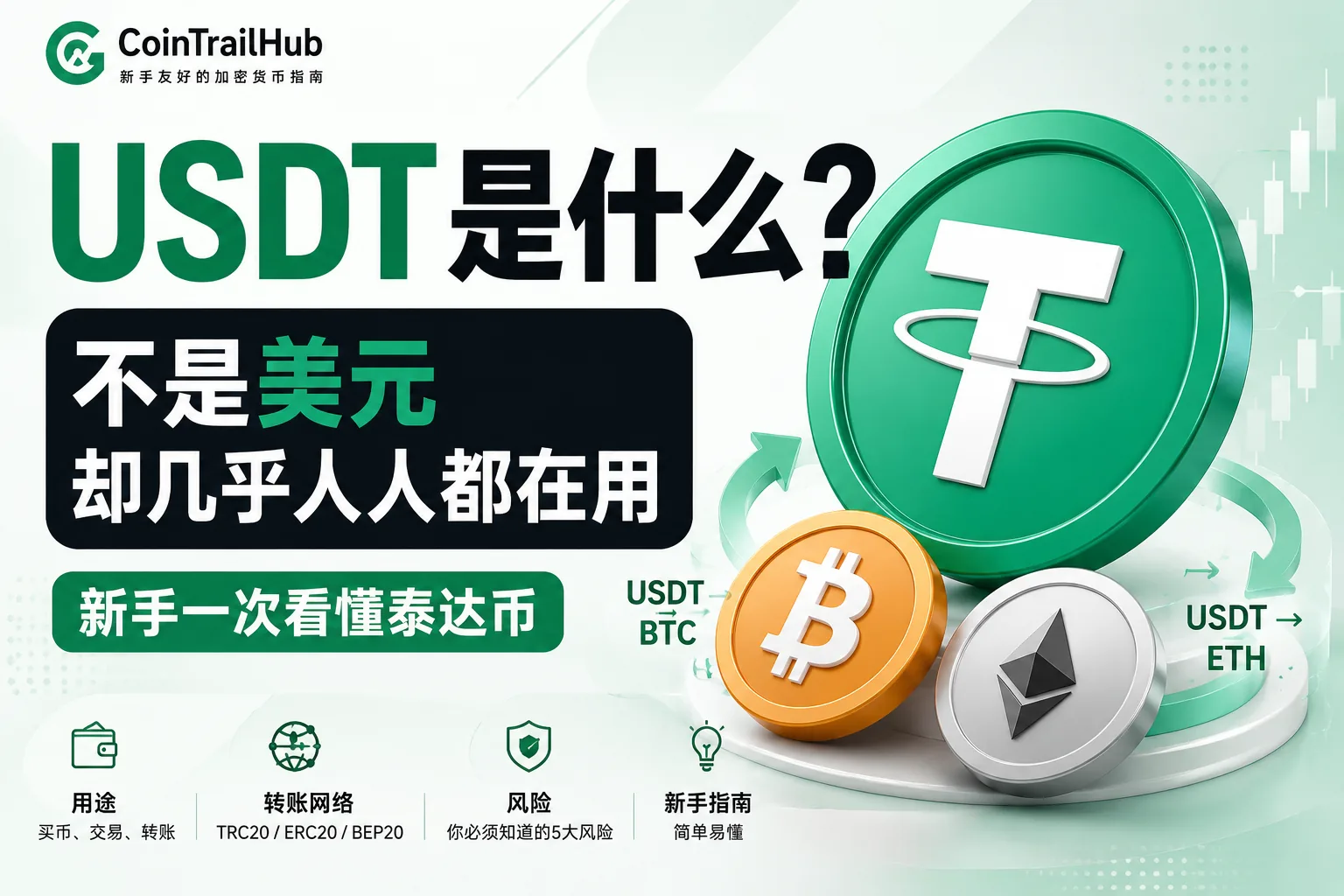
Table of contents

Binance new user rewards
20% trading fee rebate
Official Binance registration. Complete identity verification (KYC) to trade and withdraw.
Many beginners first see USDT when buying BTC or ETH on an exchange.
The page shows BTC/USDT, ETH/USDT, and many people assume USDT is just US dollars. It isn't.
USDT is one of the most commonly used stablecoins in the crypto market. People use it to buy and sell crypto, transfer funds, or as an in-between settlement asset. But it is not dollar cash, and it is not a bank deposit.
The real pitfalls are usually in transfers: the same USDT comes in different networks such as TRC20, ERC20 and BEP20. Choose the wrong network and the funds may not arrive; without enough fee assets, the transfer may not go through at all.
So this article only covers what beginners most need to understand: what USDT is, why everyone uses it, how it differs from the US dollar, and where transfers most easily go wrong.
This article is for basic crypto education only and does not constitute investment, wealth-management or trading advice.
USDT in 30 seconds
- Name: USDT (Tether USDt)
- Type: US-dollar stablecoin
- Issuer: Tether
- Target price: 1 USDT ≈ 1 USD
- Common uses: buying/selling BTC and ETH; fund transfers between exchanges; P2P on/off-ramp; on-chain transfers
- Common networks: TRC20, ERC20, BEP20, Arbitrum, Polygon, Solana
- Fee reminder: fees differ by network; ERC20 usually needs ETH as gas
- Common beginner mistakes: wrong network, wrong address, no fee assets, trusting fake support
- One-line takeaway: USDT is one of the most widely used dollar stablecoins, but it is not a dollar deposit
If you haven't yet figured out the basics of crypto, on-chain assets and Web3 wallets, start here: What is crypto? Cryptocurrencies, Web3 wallets and on-chain assets (2026).
Let's be clear: USDT is a tool, not a dollar deposit
USDT is genuinely widely used.
Many people first come across USDT before buying BTC or ETH; many people also reach for USDT first when transferring between exchanges.
But one distinction matters:
USDT can stay close to 1 dollar, but it is not the dollar.
It is not dollar cash sitting in a bank account, and it has no deposit insurance.
More accurately, USDT is a common tool in the crypto world. It is convenient, liquid and widely used, but it also carries issuer, reserve, regulatory, de-peg and operational risks.
So for a beginner, there's no need to overcomplicate USDT, but you also shouldn't treat it as a completely risk-free dollar deposit.
1. What exactly is USDT?
USDT, whose full name is Tether USDt, is a dollar-pegged stablecoin issued by the company Tether.
A stablecoin, simply put, is a cryptocurrency whose price tries to stay stable against a fiat currency or asset.
USDT is pegged to the US dollar.
That is, USDT's target price is:
1 USDT ≈ 1 USD
So many people call USDT "U", and some think of it as "digital dollars" in the crypto market.
For example:
100 USDT roughly corresponds to about 100 dollars of value.
1000 USDT roughly corresponds to about 1000 dollars of value.
But note: just because it stays close to the dollar, don't treat it as the dollar itself.
The dollar is fiat currency; USDT is a stablecoin.
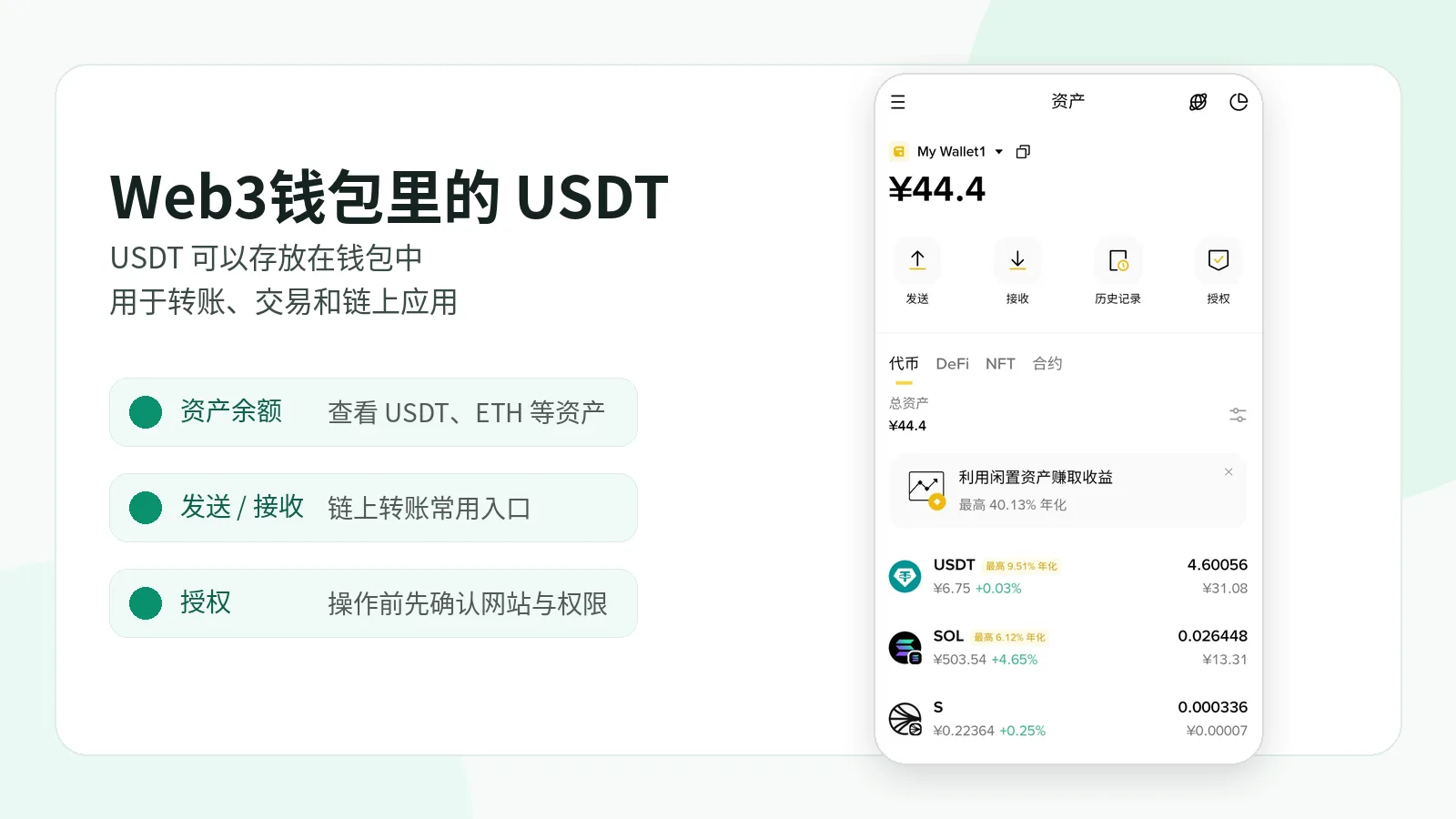
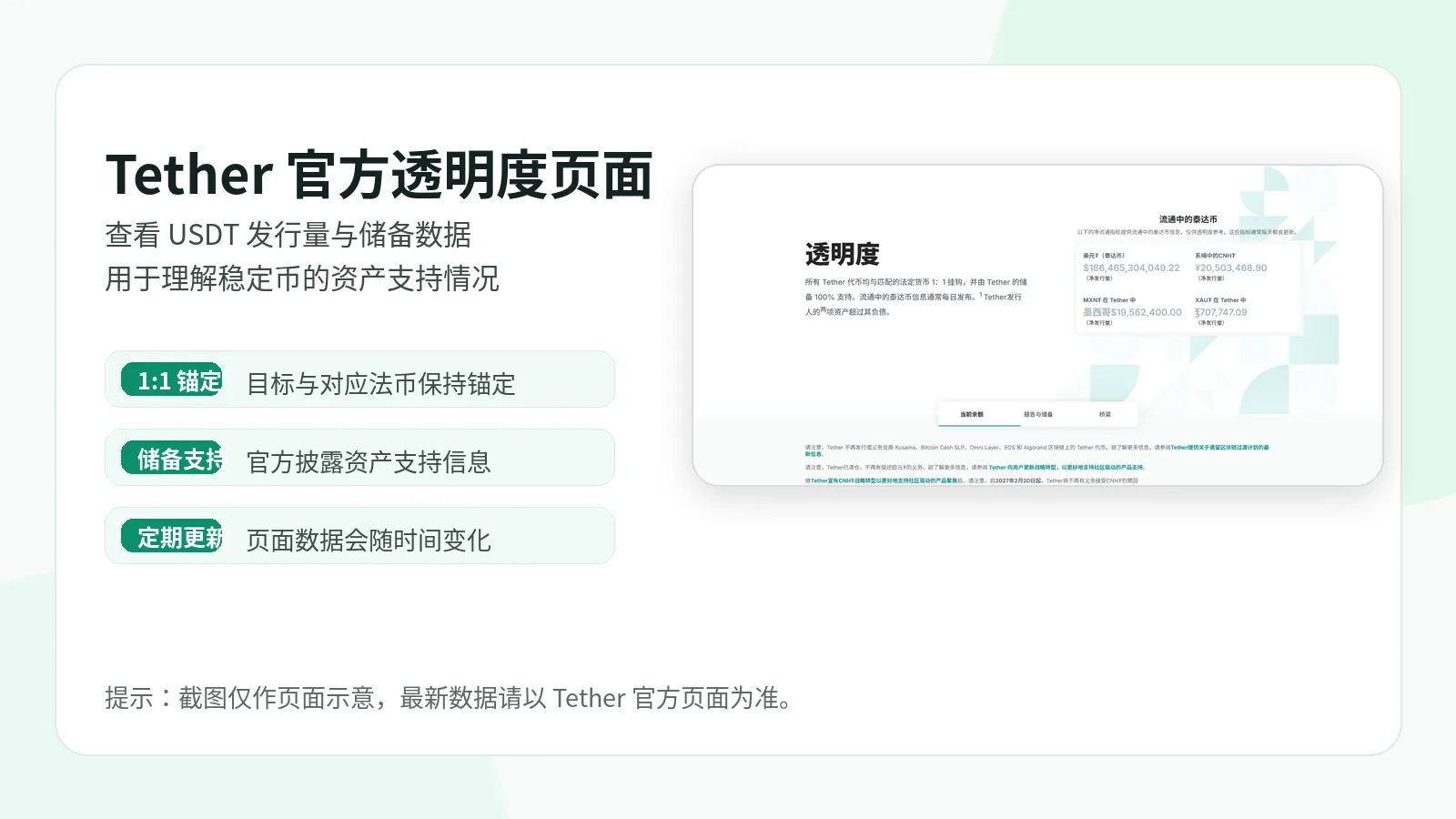
USDT's price stays close to 1 dollar most of the time because the market believes Tether holds enough reserve assets to back it. The Tether official transparency page states that Tether tokens are pegged 1:1 to the corresponding fiat and are backed by reserve assets.
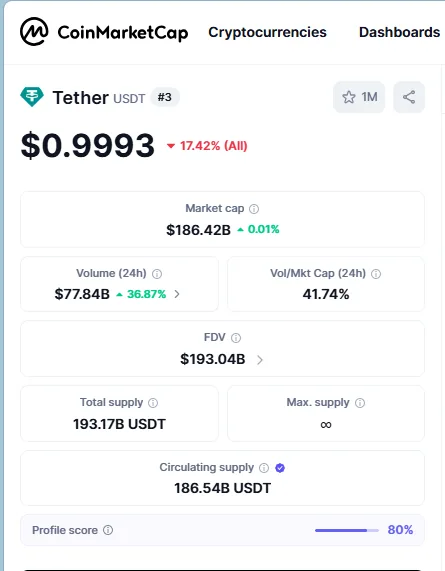
As of 2026, CoinMarketCap Tether USDt data shows USDT is still one of the largest stablecoins by market cap, and one of the most common pricing and settlement instruments in the crypto market.
Many mainstream trading pairs on exchanges — such as BTC/USDT, ETH/USDT, SOL/USDT — are priced in USDT.
So the more accurate statement is:
USDT is one of the most commonly used dollar stablecoins in the crypto market.
If you don't yet understand "on-chain transfer" and "blockchain network", start here: What is a blockchain? How it works, uses and risks (2026).
2. Why do people usually use USDT first when buying coins?
Simply put: convenience.
Open an exchange and you'll often see trading pairs like:
BTC/USDT
ETH/USDT
BNB/USDT
SOL/USDT
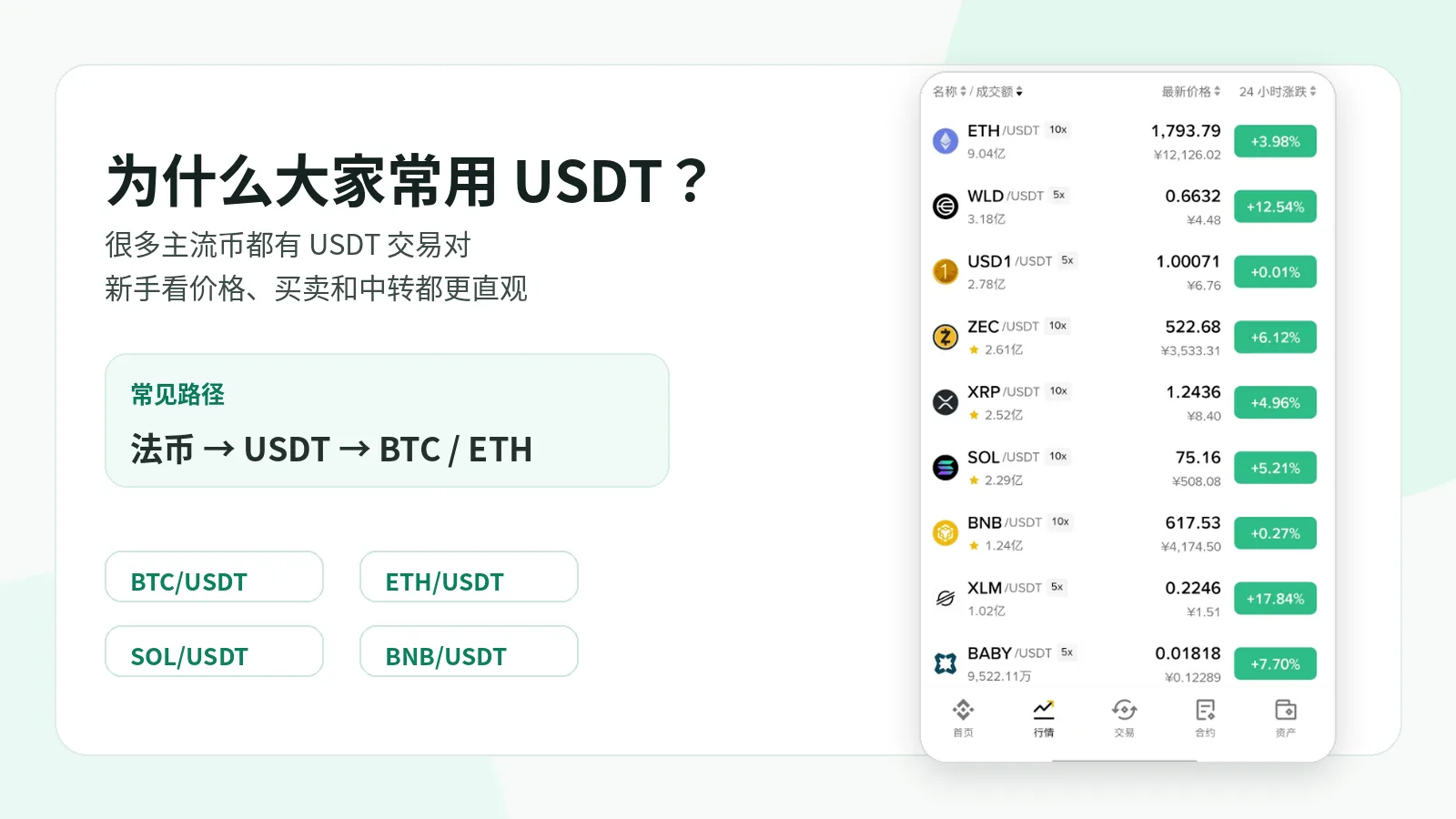
This means you can use USDT to buy BTC, ETH, BNB and SOL, or sell these coins back into USDT.
A beginner's first buying path is usually:
fiat → USDT → BTC / ETH
For example, first get USDT via P2P, then use USDT to swap for BTC or ETH.
That's why many people say "buy U first".
It's not because USDT is necessarily the safest, but because it's widely used on exchanges, has many trading pairs and strong liquidity, and makes prices easy for beginners to read.
If you're learning about USDT because you want to understand BTC, continue here: What is Bitcoin (BTC)? How it works, value and risks (2026).
As of June 2026, CoinMarketCap shows USDT still near the top of the crypto market-cap ranking, in the hundreds of billions of dollars. This shows how large its usage is, but it doesn't mean USDT is risk-free.
For an ordinary beginner, USDT's main uses are:
Buying mainstream crypto assets like BTC and ETH.
Temporarily holding USDT after selling a crypto asset.
Transferring between exchanges.
Doing P2P on/off-ramp.
Serving as a common pricing unit in the crypto market.
3. USDT and the US dollar are not the same thing
This is the easiest place for beginners to misunderstand.
Many people see 1 USDT close to 1 dollar and think:
So USDT is just dollars?
No.
The dollar is US fiat currency.
USDT is a stablecoin issued by the company Tether.
Dollars can sit in a bank account.
USDT is usually held in an exchange account or a Web3 wallet address.
The dollar is backed by a national credit system.
USDT is backed by issuer reserves, market trust, redemption mechanisms and exchange liquidity.
So you can treat USDT as a dollar-priced instrument in the crypto market, but don't treat it as a bank deposit.
This matters.
Because the moment you think of USDT as a "dollar deposit", you tend to overlook issuer risk, reserve risk, regulatory risk and de-peg risk.
A stablecoin only has a relatively stable price target; it does not guarantee that principal is absolutely safe.
4. Where beginners most often go wrong transferring USDT?
USDT itself isn't hard to understand; the real trouble is in transfers.
The beginner problems I've seen cluster in a few places.
The first is choosing the wrong network.
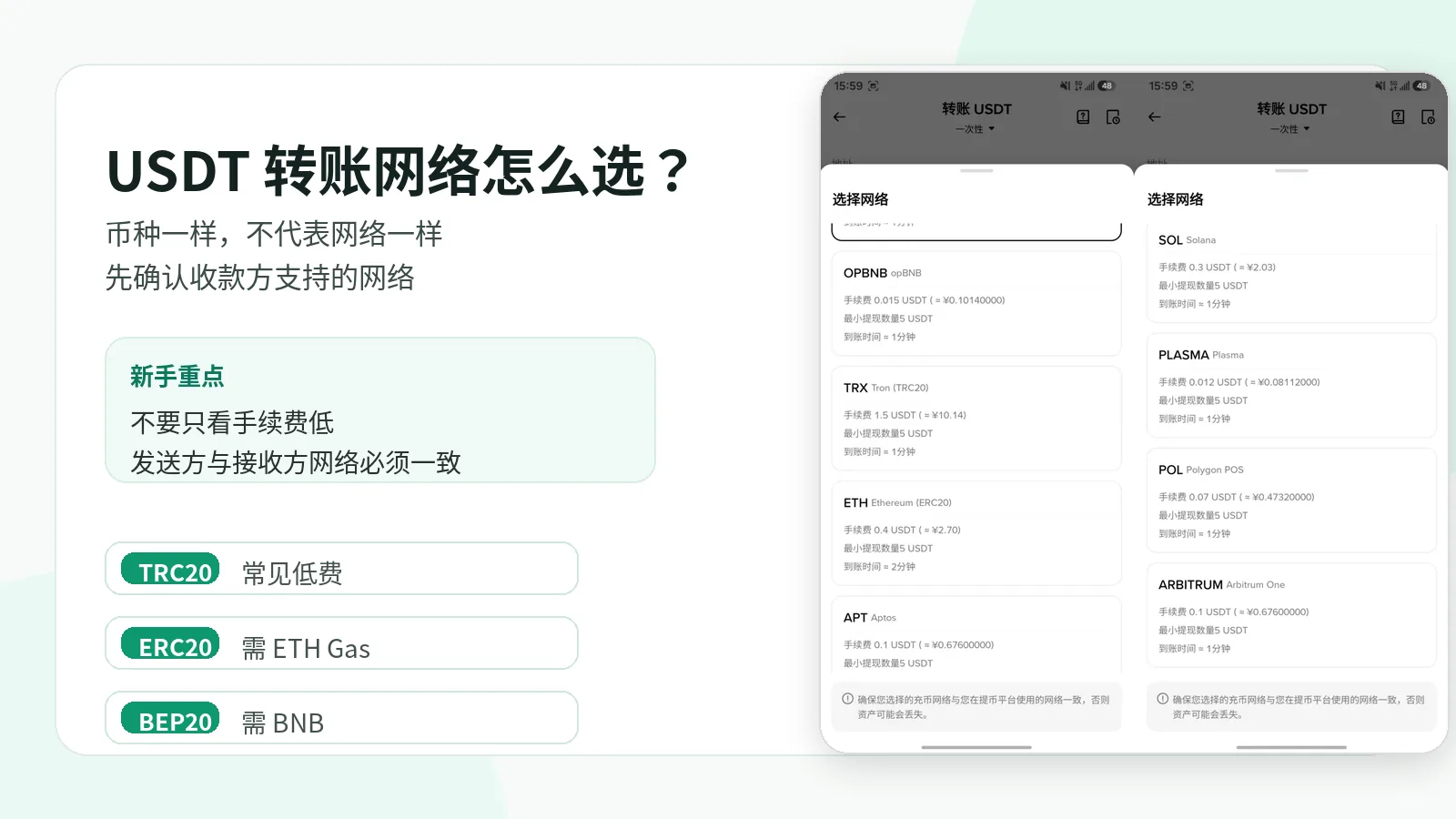
The same USDT exists on TRC20, ERC20, BEP20 and other networks. The network you choose on the sender side must match the network the receiver supports.
The second is copying the wrong address.
Some people copy an address without checking it, and there have even been cases of clipboard addresses being replaced. Before transferring, look at the first few and last few characters of the address.
The third is not having fee assets.
For example, if you're transferring ERC20-USDT and your wallet has only USDT but no ETH, the transfer may fail.
The fourth is trusting fake support.
A lot of USDT theft isn't because USDT collapsed, but because users clicked a fake link, trusted a fake support agent, or even gave out their verification code or seed phrase.
So before transferring USDT, don't only ask about the fee.
More important is confirming:
the network is right, the address is right, and the fee assets are enough.
5. How to choose between TRC20, ERC20 and BEP20?
A beginner doesn't need to research too many technical details at first; understanding the day-to-day differences is enough.
| Network | Chain | Characteristics | Notes |
|---|---|---|---|
| TRC20 | Tron | Usually lower fees, faster arrival | The receiver must support TRC20 |
| ERC20 | Ethereum | Mature ecosystem, supported by many wallets and platforms; fees can be high | Transferring from a Web3 wallet usually needs ETH for gas |
| BEP20 | BNB Chain | Common, fees usually not high | The receiver must support BEP20; don't transfer just because the address starts with 0x |
TRC20
TRC20 is USDT on the Tron network.
Many exchanges and P2P scenarios use it.
Its advantage is usually lower fees and faster arrival.
But the prerequisite is: the receiving platform or wallet must support TRC20.
Don't assume every place accepts it just because TRC20 is cheap.
ERC20
ERC20 is USDT on the Ethereum network.
Its advantage is a mature ecosystem with broad wallet and platform support.
But fees can be quite high.
And if you transfer ERC20-USDT from a Web3 wallet, you usually need ETH as gas. The Ethereum.org gas documentation explains that gas can be understood as the fee paid to execute a transfer or contract operation on the Ethereum network.
BEP20
BEP20 is USDT on BNB Chain.
It's also common on some exchanges and wallets, and its fees are usually not high.
But the receiver must support BEP20.
Don't assume you can transfer freely just because addresses start with 0x. ERC20 and BEP20 addresses can look similar, but they're not the same network.
If you only remember one sentence:
Don't choose the "cheapest" network — choose the network "the other side supports".
6. Why can't I transfer USDT even though my wallet has it?
This is a very common question.
Many people see USDT in their wallet and assume they can transfer it directly.
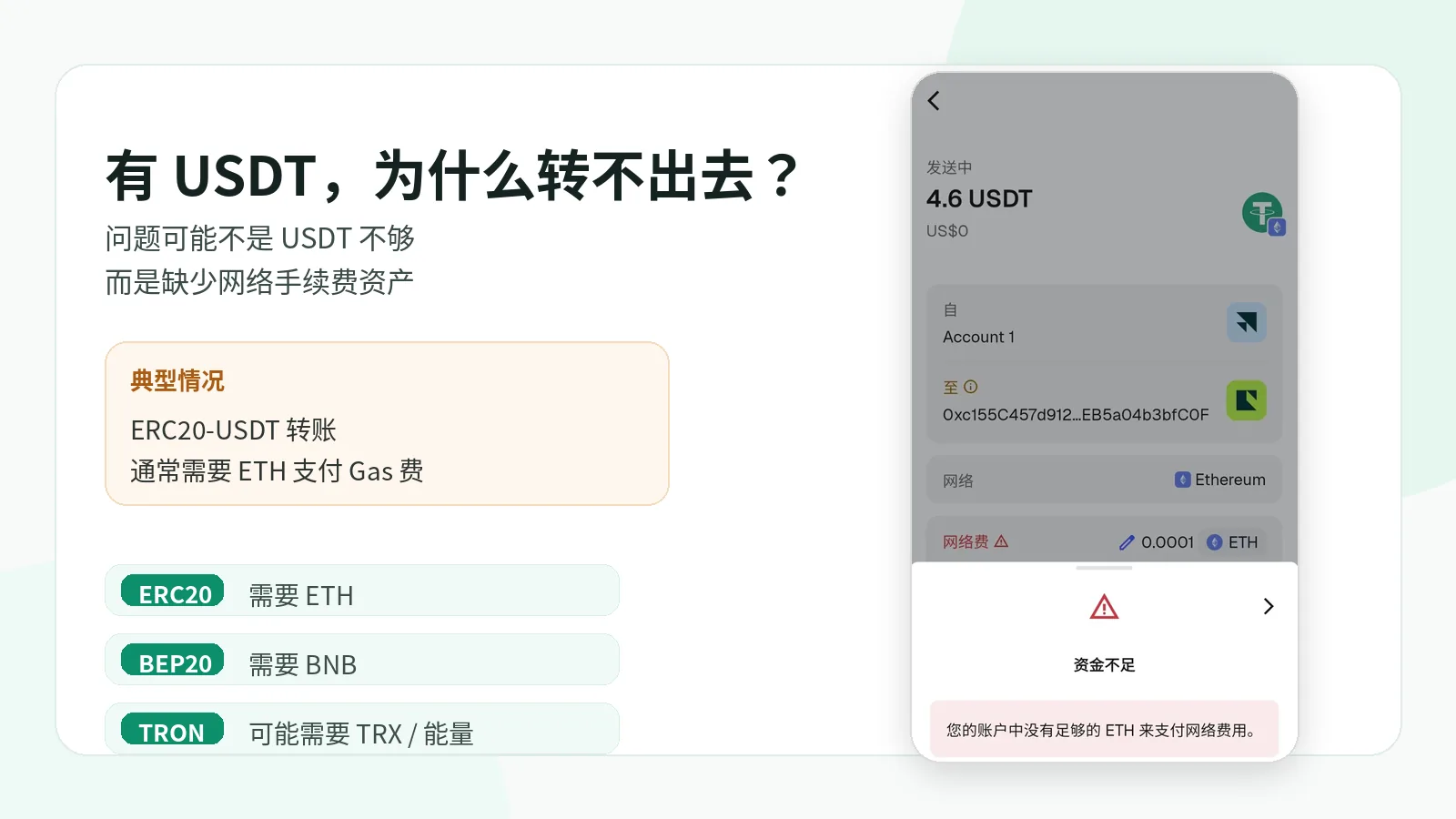
But an on-chain transfer isn't just about whether you have USDT; it's also about whether you have the corresponding network's fee asset.
For example:
ERC20-USDT usually needs ETH to pay gas.
BEP20-USDT usually needs BNB to pay fees.
The Tron network may involve TRX or energy resources.
So you have 500 USDT but your ETH balance is 0 — transferring ERC20-USDT may then fail.
This isn't a broken wallet, and your USDT isn't gone.
You're just missing the fee asset.
My own habit is: if a wallet holds ERC20 assets, keep a little ETH; if it's BNB Chain, keep a little BNB. The amount doesn't need to be large, but at least don't get stuck at the moment you want to transfer.
If you want to understand ETH, gas and the Ethereum network further, read: What is Ethereum? Smart contracts, gas and Web3.
7. Is USDT safe? Focus on these 5 risks
Whether USDT is "safe" can't be answered with a simple yes or no.
The more practical statement is:
USDT is widely used, but it's not risk-free.
Focus on five categories of risk.
1. Issuer risk
USDT is issued by the company Tether.
Holding USDT essentially means trusting that Tether holds enough reserve assets to back it.
If the issuer faces serious financial trouble, redemption pressure, or a market confidence crisis, USDT's price could be affected.
2. Reserve asset risk
Many people assume that having reserves means it's safe.
But you also have to look at the quality and liquidity of the reserve assets.
If reserves are mostly high-liquidity assets like cash and short-term government bonds, market confidence is stronger.
If the market worries that reserves are opaque or too heavily weighted toward risky assets, USDT could come under pressure.
3. Regulatory risk
Stablecoin regulation has been a recurring market topic for years.
By 2026, one important change has already happened:
The U.S. has formally passed and implemented the GENIUS Act (a stablecoin law).
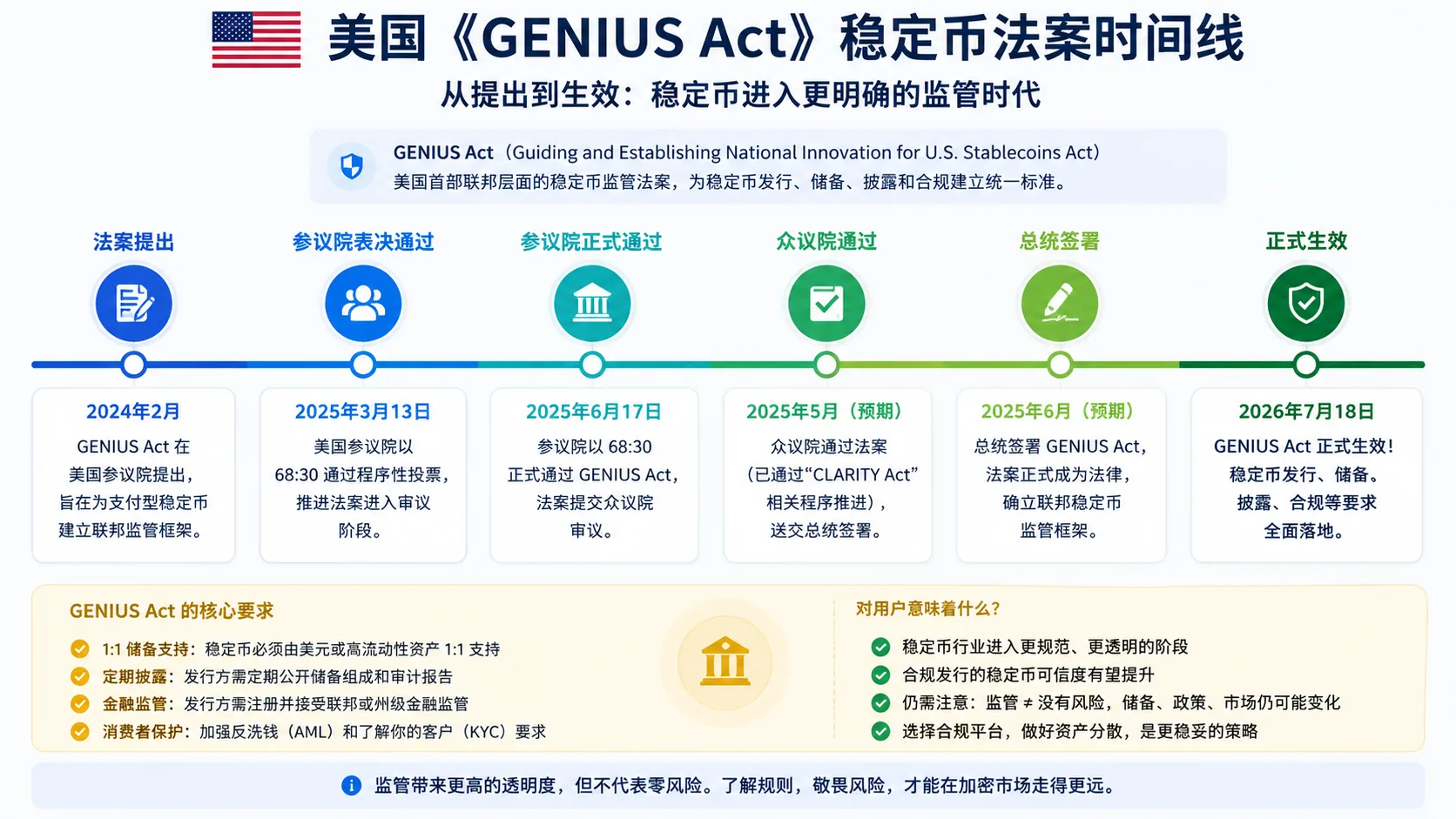
This is the first U.S. federal-level stablecoin regulatory framework, setting clearer requirements for reserve assets, disclosure and compliant operation. You can read the details in the U.S. Congress GENIUS Act bill text.
In the long run, clearer regulation may help the stablecoin industry develop in a more standardized way.
But note:
Regulation passing does not mean stablecoins are completely risk-free.
Issuer risk, reserve risk, market risk and user operational risk still exist.
So judging whether USDT is safe can't only look at whether regulation is sound; it also depends on the issuer's strength, reserve quality and your own usage habits.
4. De-peg risk
USDT's target price is 1 dollar, but that doesn't mean it's permanently fixed at 1.0000 dollars.
During market panic, tight liquidity or regulatory shocks, USDT may briefly fall to 0.99, 0.98, or even show larger swings.
A short de-peg doesn't necessarily mean it's going to zero, but beginners often panic when they see the price deviate.
5. Platform and operational risk
A lot of USDT losses have nothing to do with USDT itself, but with the platform or the user's operation.
For example:
An exchange account gets hacked.
Choosing the wrong withdrawal network.
Copying the wrong address.
Clicking a phishing site.
Trusting a fake support agent.
Skipping a small test transfer and moving a large amount directly.
These risks are more common than "will USDT go to zero", and more likely to hit beginners.
8. What I check before transferring USDT
Before transferring USDT now, I always check these items.
First, the coin.
Confirm what I'm transferring is USDT — not another stablecoin, and not a similarly named fake coin.
Second, the network.
The network chosen on the sender side must match the network the receiver supports.
Third, the address.
After copying the address, check the first few and last few characters. Don't just trust "copied successfully".
Fourth, the fee asset.
If it's ERC20, does the wallet have ETH?
If it's BNB Chain, does the wallet have BNB?
If it's Tron, are the relevant fee resources sufficient?
Fifth, a small test transfer.
The first time I transfer to a new address, no matter how small the amount, I recommend a small test first.
Confirm arrival, then move the larger amount.
This step looks like a hassle, but it's far less trouble than finding support, filing tickets and waiting after a wrong transfer.
Many beginners genuinely lose money not because USDT itself failed, but because they trusted "copy successful" and the "default network".
9. Is it better to keep USDT on an exchange or in a wallet?
There's no absolute answer; it depends on how you use it.
If you're a beginner mainly buying and selling BTC and ETH on an exchange, keeping it on a large exchange short-term is more convenient.
But exchanges have risks too, such as account hacks, platform risk control, withdrawal limits, phishing sites and fake support.
If you keep USDT in a Web3 wallet, you have more control over the asset, but also more responsibility.
If you lose your seed phrase, no one can help you recover it.
If you approve a malicious contract, your assets can be drained.
If you transfer on the wrong network, it can be very hard to recover.
Without fee assets, you may not be able to transfer out.
So it's not that exchanges are always better, nor that wallets are always better.
A better approach for beginners is:
Learn with small amounts, spread your holdings, and don't concentrate all assets in one place.
10. A few suggestions for beginners using USDT
First, don't treat USDT as a bank deposit.
It's a stablecoin, not dollar cash, and it has no deposit insurance.
Second, don't hold a large amount in only one stablecoin long-term.
If the amount is large, at least understand the risks of different stablecoins, platforms and wallets.
Third, check the network before transferring.
USDT exists on multiple chains; same coin doesn't mean same network.
Fourth, do a small test transfer the first time.
Confirm arrival, then consider a larger amount.
Fifth, don't trust support agents who DM you.
Real official support will never ask for your seed phrase, private key or verification code.
Anyone who asks for these things can basically be blocked immediately.
FAQ: USDT common questions
What is USDT?
USDT is a dollar-pegged stablecoin issued by Tether, aiming to stay pegged 1:1 to the dollar. It is a common trading medium and pricing asset in the crypto market.
Is USDT the same as the US dollar?
No. The dollar is fiat currency; USDT is a stablecoin. USDT aims to stay close to 1 dollar, but it is not dollar cash and not a bank deposit.
Will USDT go to zero?
In theory there's an extreme risk, but given its current market size, liquidity and usage, the probability of USDT suddenly going to zero is not high. But that doesn't mean there's no risk — issuer, reserve, regulatory and de-peg risks all need attention.
Do I have to buy USDT before buying BTC?
Not necessarily. But on many exchanges, USDT is the common trading medium. Many beginners first get USDT via P2P, then swap USDT for BTC or ETH.
Which chain should I use to transfer USDT?
There's no fixed answer. The most important thing is that sender and receiver must support the same network. Common networks include TRC20, ERC20 and BEP20. For a first transfer, a small test is recommended.
Why can't I transfer even though I have USDT?
You may be missing the fee asset. For example, transferring ERC20-USDT usually needs ETH to pay gas. If your wallet has only USDT and no ETH, the transfer may fail.
Is USDT suitable for long-term holding?
For short-term trading or fund transfers, USDT is convenient. But for long-term large holdings, it's not advisable to rely on a single stablecoin. Stablecoins also carry issuer, regulatory, liquidity and de-peg risks.
Which is safer, USDT or USDC?
Both are mainstream dollar stablecoins, but they differ in issuer, compliance path, reserve disclosure and use cases. USDT's advantage is strong liquidity and broad usage; USDC's compliance profile is more prominent. Beginners shouldn't treat any stablecoin as absolutely safe.
Notes on the screenshots used in this article
To help beginners see USDT usage scenarios more directly, the images in this article include:
- Exchange USDT trading-pair pages;
- USDT withdrawal network-selection pages;
- Web3 wallet USDT asset pages;
- The "insufficient ETH fee" prompt when transferring ERC20-USDT;
- The Tether official transparency page;
- The CoinMarketCap USDT market-cap page.
These screenshots illustrate USDT's common uses, network selection and transfer risks. Different platforms may update their pages; when operating, always go by the platform you're currently using.
Summary: USDT is a tool, not a safe
USDT is one of the most widely used dollar stablecoins globally, and it's often the first on-chain asset beginners encounter after entering crypto.
It's convenient, liquid and widely used, and many beginners first touch USDT before buying BTC or ETH.
But remember:
USDT is a tool, not a safe.
It is not dollar cash, and not a bank deposit.
It carries issuer risk, reserve asset risk, regulatory risk, de-peg risk, as well as exchange-account and transfer-operation risk.
If you're just starting to learn crypto, don't rush into complex projects.
Getting the basics of USDT, wallets, network selection, fees and small test transfers right is the real first step for a beginner.
Related articles
How to withdraw USDT to your bank account: steps, fees, timing and account-freeze risks (2026)
USDT vs USDC: what's the difference, which is safer and how to choose (2026) — key differences and selection criteria between the two stablecoins
Where should I keep USDT bought on Binance/OKX? On the exchange or in a wallet (2026) — safe storage options after buying USDT
Sent crypto to the wrong chain? Withdrawal networks and wallet addresses (2026) — what to do if you choose the wrong TRC20/ERC20/BEP20 network
How to buy crypto: 7 things to know before buying USDT (2026) — a pre-buy checklist for USDT
Can you buy US stocks with USDT/USDC? A Binance fractional-shares test (2026) — the real path to buying US stocks with stablecoins
How to buy USDT for the first time: from registration to arrival (Binance/OKX) — the full steps from registration to arrival
Disclaimer
This article is for basic education about USDT, stablecoins and crypto only, and does not constitute investment, wealth-management or trading advice.
Crypto assets and stablecoins carry market risk, issuer risk, reserve risk, regulatory risk, liquidity risk, platform risk, network security risk and operational risk.
Any operation involving account registration, top-up, withdrawal, transfer, wallet authorization or asset management should first verify the official channel, and only proceed after fully understanding the risks.
- Tether official transparency pageUSDT issuance and reserve transparency
- CoinMarketCap Tether USDt dataTether USDt market data
- Ethereum.org gas documentationEthereum gas mechanism
- Binance Academy — stablecoinStablecoin concept
- Coinbase Learn — stablecoinStablecoin concept
- U.S. GENIUS ActU.S. stablecoin regulation (GENIUS Act)
- 2026-07-12UpdateInitial release; added USDT basics, common networks, wallet fees and GENIUS Act regulatory info.
See ourEditorial Policy and the correction process in ourCorrections Policy.
The CoinTrailHub editorial team focuses on crypto education for beginners, exchange security and P2P trading risk. This article is compiled from official sources and public data, reviewed by humans, and strives for accuracy but is not investment advice.
Last updated:2026-07-12 · Content reviewed by humans · Learn more
© 2026 CoinTrailHub · Original content. Reproduction or rewriting without permission is prohibited.