
What crypto beginners should really fear isn't the dip — it's these 8 hard-to-fix mistakes (2026)

Table of contents

Binance new user rewards
20% trading fee rebate
Official Binance registration. Complete identity verification (KYC) to trade and withdraw.
I've always felt the biggest misdirection in crypto toward beginners is that everyone teaches you how to buy and how to read price swings, but almost no one first tells you:
Which mistakes you can still handle slowly, and which mistakes, once made, may leave you no chance to regret them at all.
A market drop is unpleasant, but the price is still there, and your assets usually are too.
The real trouble is a different class of mistakes:
Wrong network, leaked seed phrase, releasing coins in P2P before the money actually arrived, and signing wallet authorizations you don't understand.
These problems have nothing to do with the market.
You might even be completely right about the direction, yet lose your assets to a single low-level operation.
So I don't recommend that beginners rush to research the next hot coin right after registering an account.
First, avoid these 8 pitfalls.
Avoiding one of these mistakes once often matters more than catching one rally.
1. Hearing "coins are safer in a wallet" and immediately withdrawing everything
This is the one line I most disagree with telling a beginner directly.
Wallets do have value.
Holding your own private keys and not depending on a single platform — none of that is wrong.
But a wallet is not an automatic safe.
Someone who doesn't yet understand how to store a seed phrase, how to choose a withdrawal network, or how to read a wallet authorization isn't "taking control" by moving assets into a wallet — they're loading every responsibility onto themselves at once.
If an exchange account has a problem, there's usually a login history, identity verification, and an appeal channel.
A wallet is different.
Lose your seed phrase, and no one can reset it for you; leak your private key, and no support can freeze it for you.
So my position is clear:
Until you understand seed phrases, private keys, withdrawal networks and wallet authorizations, don't rush to move all your assets out just because of the slogan "a wallet is safer".
Where your assets live shouldn't be decided by a slogan.
It depends on whether you actually have the ability to keep them safe.
2. Treating USDT as risk-free cash
USDT has "USD" in the name and its price usually hovers near one dollar, so many people naturally read it as dollars in a bank card.
But the two are not the same thing.
USDT is a stablecoin issued by a company, backed by reserve assets, custodians, blockchain networks and the issuer's credit.
It's genuinely very useful.
Exchanging coins, transferring between platforms, on-chain settlement — many scenarios depend on USDT.
But useful doesn't mean risk-free.
I don't support calling USDT a scam, and I don't support wrapping it as absolutely safe digital cash.
A more accurate understanding is:
USDT is a widely circulated on-chain settlement tool, but it still carries issuer, platform, network and address-restriction risks.
USDC is a similar stablecoin, differing in issuer, reserve disclosure and main use cases.
Stablecoins can be used, but don't assume that a stable price makes them identical to a bank deposit.
For USDT's reserve and circulation data, you can check the Tether transparency page directly, rather than only reading screenshots reposted on social media.
3. Betting the whole amount on a network to save a bit of fee
When withdrawing, beginners usually double-check the address several times.
That's not wrong.
What's easily overlooked is the network.
The same USDT can run on Tron, Ethereum, BNB Chain, Arbitrum, Base, Solana and other networks.
They're all called USDT, but they don't travel the same chain.
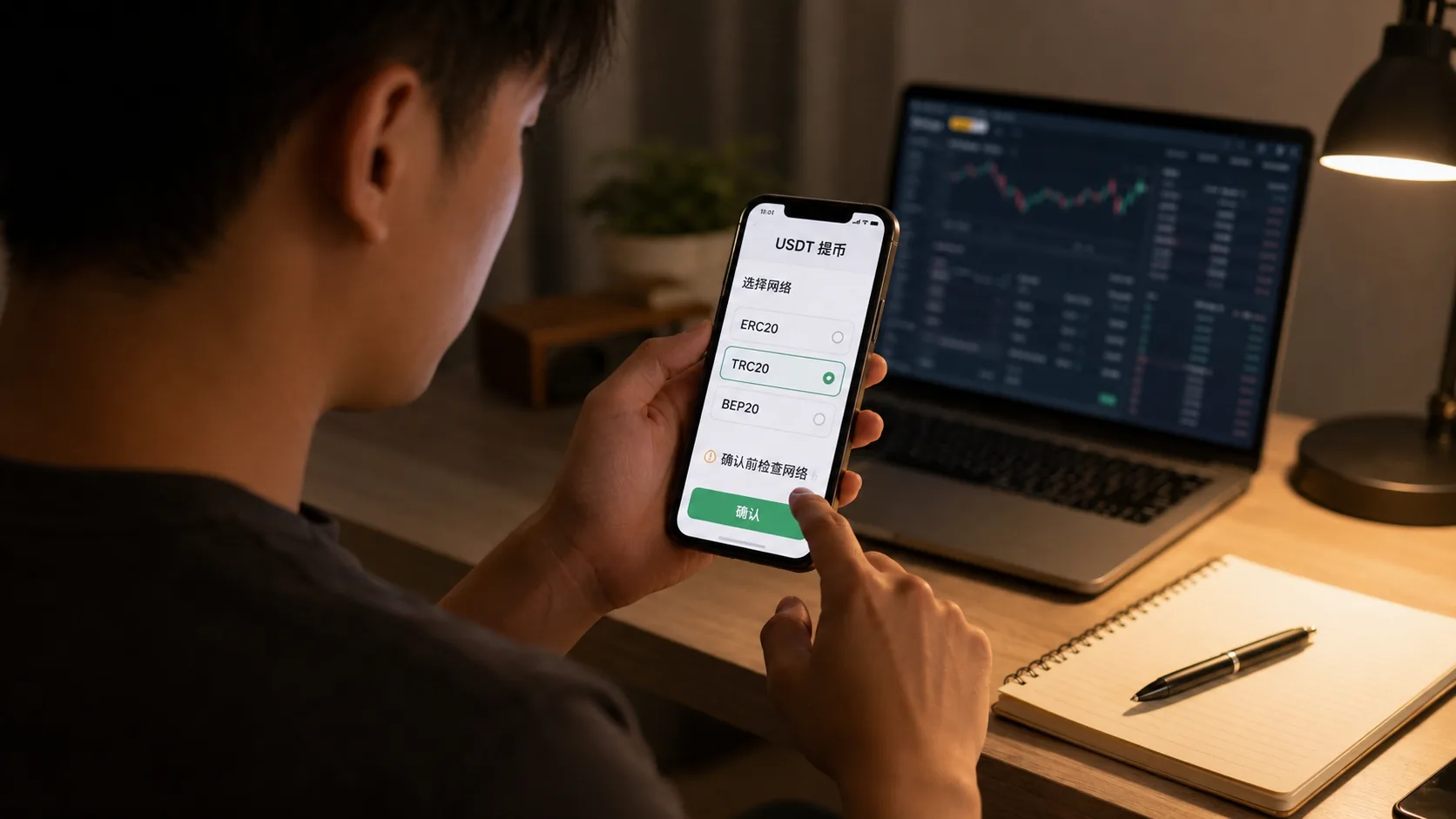
The most dangerous idea I've seen is:
Whichever network has the cheapest fee, I'll pick that one.
That's not saving money.
That's betting the entire amount that the recipient happens to support that network.
If the receiving platform only supports ERC20 and you withdraw via TRC20, your assets may fail to arrive. Even if there's a chance to handle it later, it usually needs manual platform intervention and recovery isn't guaranteed.
There's only one correct order:
First confirm which network the recipient supports, then go back to the withdrawal page and choose the same network.
For your first transfer to a new address, always do a small test first.
Some people think paying one extra fee isn't worth it.
But after doing this for a while you'll understand: paying one extra test fee is far cheaper than having the whole amount stuck on the wrong network.
An experienced user doesn't necessarily withdraw faster.
On the contrary, they withdraw slower.
Because they know on-chain transfers usually have no undo button.
If you've already hit a wrong network or a deposit that didn't arrive, read: Can you recover a wrong-chain transfer? Withdrawal networks and wallet addresses (2026).
4. Saving your seed phrase as a screenshot on your phone
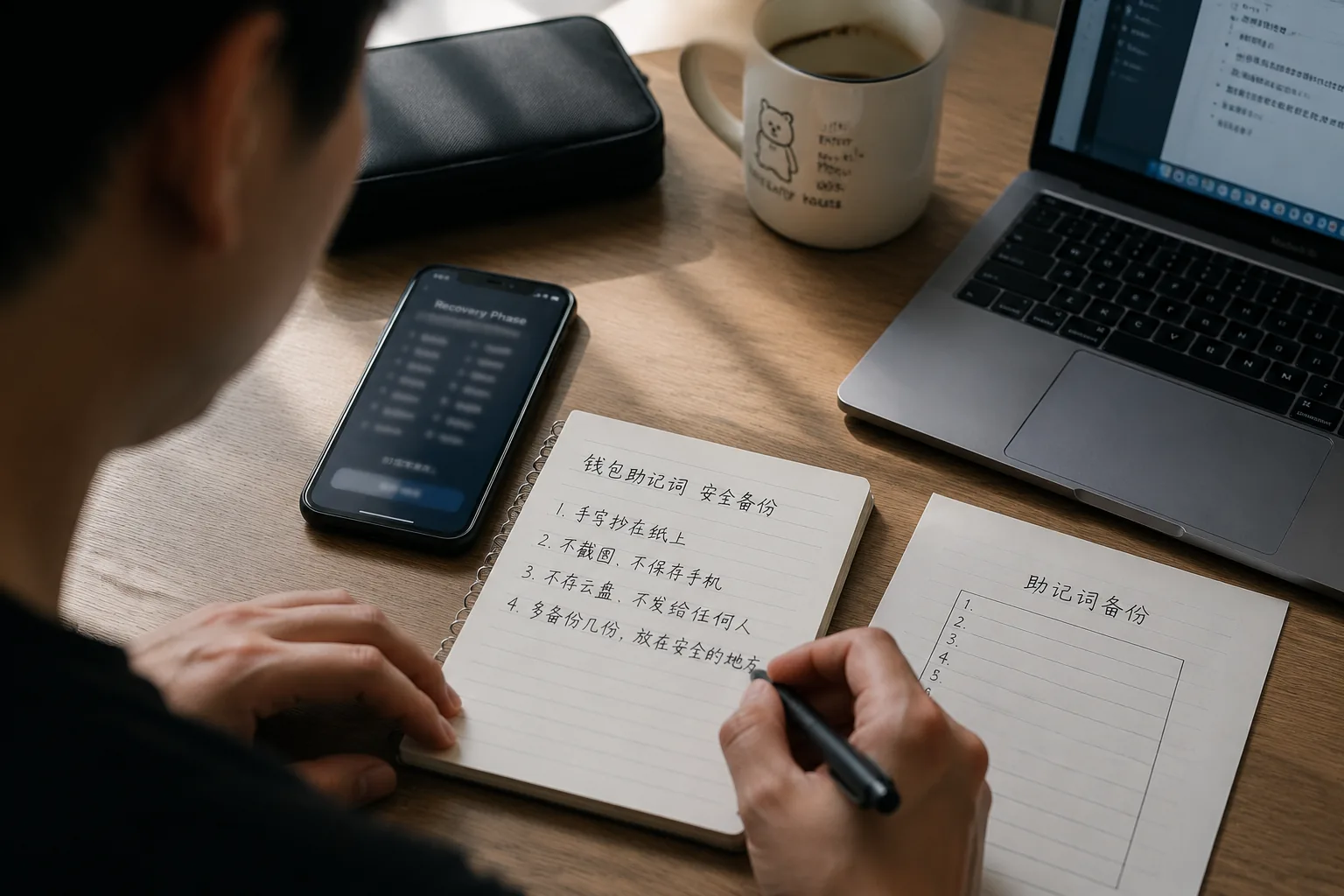
Seeing 12 or 24 English words, many people's first instinct is to screenshot them.
Convenient, and hard to forget.
But this is one of the most dangerous habits in wallet security.
A seed phrase is not an ordinary password.
Leak a password and you can usually change it; leak a seed phrase and someone can directly restore your wallet on another device.
Changing your wallet app's login password afterward won't stop someone who already has the seed phrase.
So anyone who asks you for your seed phrase — you don't need to keep judging their identity.
No matter what they claim to be:
- Platform support
- Wallet technician
- Project admin
- Airdrop reviewer
- Account security specialist
As soon as someone asks for your complete seed phrase, stop communicating immediately.
Real official support only tells you the steps; they won't ask you to send over your seed phrase, and they won't remotely "restore your wallet" for you.
Phone screenshots, cloud photo albums, email drafts, cloud drives, WhatsApp and Telegram are all unsuitable for long-term seed phrase storage.
My position has no gray area:
Once a seed phrase enters an internet-connected device, the risk has already increased.
It's not a verification code.
It's the highest control authority over your wallet.
5. Seeing a payment screenshot in P2P and rushing to release the coins
The most common P2P scam is often not complicated at all.
The other party sends a payment screenshot, then keeps pressuring you:
I've paid already, the bank is delayed, release the coins first.
Sometimes they'll add SMS, email, or even a fake support agent to pile on pressure.
A nervous beginner will easily click "confirm release".
I have only one principle in P2P:
No arrival, no release.
A screenshot doesn't count as arrival.
An SMS doesn't count as arrival.
The other party saying "I've paid" doesn't count as arrival.
Only when you log into your bank or payment account yourself and see the balance and transaction record genuinely increase does the payment count as complete.
Don't think repeatedly verifying means you distrust the other party.
P2P was never completed through trust — it's completed through platform orders, payment records and release rules.
A normal trade isn't afraid of you confirming.
Only someone who wants you to make a mistake will keep urging you to hurry.
If there's a dispute, appeal within the platform order.
Don't add private contacts, and don't let a so-called support agent take you off-platform.
6. Rushing to deposit right after registering
Many people, after registering on an exchange, immediately check the market, deposit and buy.
I suggest reversing the order completely.
Do security settings first.
At minimum, check these items:
- Use a unique password
- Enable an authenticator
- Set an anti-phishing code
- Check login devices
- Enable the withdrawal whitelist
- Protect the registration email
- Don't use a temporary SMS number
These settings look boring, but they matter far more than studying a few technical indicators.
Especially the email.
Many people assume that as long as the exchange app is fine, the account is safe.
In reality, the email, phone number, browser, computer and phone are all part of account security.
If the email is controlled, the other party may try to reset the password; if the phone is remotely controlled, verification codes and operation pages can also be seen directly.
Security settings aren't an add-on after registration.
They're the foundation you must lay before you start operating.
Putting things into a house before installing the door lock is itself the wrong order.
For the specific steps, see: Binance/OKX account security checklist: how to enable 2FA, anti-phishing code and withdrawal whitelist (2026).
7. Treating "small-money futures" as low-risk practice
"Open a little futures with small money, just as practice."
That's one of the most beginner-harming pieces of advice I've heard.
Leverage doesn't suddenly become gentle just because the amount is small.
It only amplifies wrong judgment, emotional loss of control and operational mistakes together.
Buy spot wrong, and your assets are usually still in the account — you at least have time to reassess.
Get the futures direction wrong on top of high leverage, and the position may quickly hit forced liquidation.
What's worse, many beginners don't stop and review after their first loss.
Instead they immediately add leverage, top up margin, and open positions frequently, trying to claw back the loss as fast as possible.
What actually blows things up in the end is usually not the first wrong judgment.
It's the chain of operations afterward that refuse to stop.
So my position has always been clear:
Until you understand spot, position sizing, stop-loss and your own risk tolerance, stay away from high leverage.
Not touching futures doesn't mean missing out on crypto.
For most beginners, not touching high leverage is itself an advantage.
8. Signing wallet pop-ups you can't understand
Many people get nervous at the words "connect wallet" after hearing about wallet scams.
Actually, connecting a wallet alone doesn't necessarily move your assets.
What's really dangerous is the signing and authorization that follow.
Some signatures only verify an address; some authorizations may allow a contract to operate your assets.
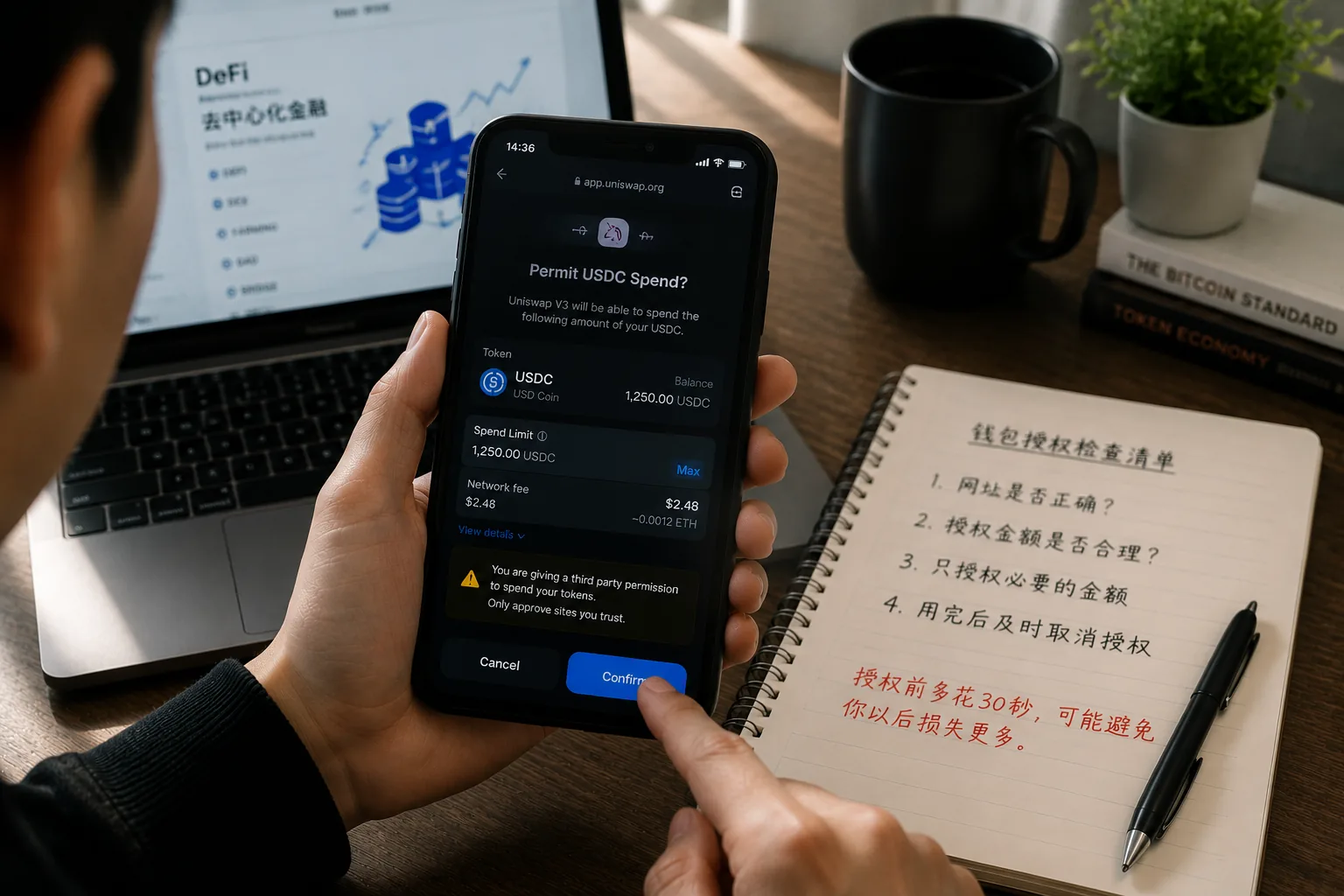
The problem is that many beginners don't read at all.
The page says confirm, so they confirm; the page says verification needed, so they sign; the page says pay a bit of gas to claim rewards, so they follow along.
My principle is one line:
If you don't understand it, don't sign.
Don't guess.
Don't sign just because you're afraid of missing an airdrop.
Don't sign just because a webpage looks like the official site.
Don't sign just because someone in a group said it worked.
What crypto scams exploit most isn't just technical vulnerabilities.
It's people's impatience, greed and herd mentality.
The truly dangerous button often looks exactly like the ordinary "confirm" button.
MetaMask's official Web3 security guide also repeatedly warns not to leak your seed phrase or private key, and not to sign requests you don't understand.
| Mistake | Risk | Correct approach |
|---|---|---|
| Withdrawing everything because "a wallet is safer" | Lost seed phrase = no reset; leaked key = no support freeze | Don't withdraw everything until you understand seed phrase, key, network and authorization |
| Treating USDT as risk-free cash | Issuer, platform, network and address-restriction risks | Don't treat a stablecoin as a bank deposit |
| Betting the network to save fees | Recipient doesn't support it, assets may not arrive | Confirm the recipient's network first, then choose the same one |
| Screenshotting the seed phrase on your phone | Risk rises once it's on a connected device | Write it down offline; don't screenshot or share it |
| Releasing coins on a payment screenshot in P2P | A screenshot or SMS doesn't count as arrival | No arrival, no release — only count your own account's real arrival |
| Depositing right after registering | A controlled email/phone may reset your password | Do 2FA, anti-phishing code, whitelist and other security first |
| Small-money futures | Leverage amplifies wrong judgment and loss of control | Stay away from high leverage until you understand spot, size and stop-loss |
| Signing wallet pop-ups you don't understand | Authorization may let a contract move your assets | If you don't understand it, don't sign |
Experienced users aren't braver — they're just slower at key moments
This market has new projects, new concepts and new opportunities every day.
What beginners usually lack isn't opportunity.
It's the ability to control their hands.
See a hot asset, and you can't help chasing it; see a cheap fee, and you can't help choosing it; see an airdrop link, and you can't help clicking it; see a loss, and you can't help adding to the position and piling on leverage.
Before many mistakes happen, there are actually a few seconds where you can stop.
The biggest difference between an experienced user and a beginner isn't necessarily who predicts the market better.
It's who understands more clearly which places can never be rushed.
Transfers get tested.
Releases get confirmed.
Authorizations get checked.
Things you don't understand get abandoned.
Finally, remember these 8 lines:
- Until you understand the seed phrase, don't rush to move everything into a wallet
- USDT is a stablecoin, not dollars in a bank account
- When withdrawing, don't just check the address — check the network too
- Never screenshot the seed phrase, and never hand it to anyone
- In P2P, never click release without real arrival
- After registering, finish security settings before operating
- Futures aren't a practice tool — they only amplify mistakes
- If you don't understand a wallet signature, refuse it directly
In crypto, making one fewer mistake often matters more than catching one more opportunity.
Get the market wrong, and the market gives you another chance.
Get security wrong, and the market may not give you a second chance.
Protect your assets first, then talk about the next opportunity.
Continue reading
- What is a crypto wallet? Wallet addresses, seed phrases and asset safety (2026)
- What is USDT? Tether's uses and risks (2026)
- What is a seed phrase? Why no one can recover your assets if you lose it (2026)
- How to prevent wallet theft? Seed phrases, wrong-chain transfers, authorization risks (2026)
- What is cryptocurrency? Basics, common misconceptions and a learning path
- Binance P2P USDT pitfalls: 6 mistakes beginners make (2026)
- How beginners avoid trading pitfalls: don't trust "signal leaders", stay away from high leverage
Risk note: this article is for cryptocurrency fundamentals and security education, not investment advice. Rules across platforms, regions and blockchain networks may change; before operating, follow the latest official instructions.
The CoinTrailHub editorial team focuses on crypto education for beginners, exchange security and P2P trading risk. This article is compiled from official sources and public data, reviewed by humans, and strives for accuracy but is not investment advice.
Last updated:2026-07-15 · Content reviewed by humans · Learn more
© 2026 CoinTrailHub · Original content. Reproduction or rewriting without permission is prohibited.