
Bitcoin or Ethereum: Which Is Better? How to Choose for Your First Crypto Purchase (2026)

Table of contents

Binance new user rewards
20% trading fee rebate
Official Binance registration. Complete identity verification (KYC) to trade and withdraw.
Bitcoin or Ethereum: which is better? Here's the answer up front:
If it's your first crypto purchase and you don't yet know how to choose between BTC and ETH, you can usually start with Bitcoin (BTC); if you already clearly want to use DeFi, staking, Layer 2, or other on-chain apps, Ethereum (ETH) fits that need better.
Most beginners don't need to frame the question as "BTC and ETH must be an either/or."
A more practical way to think about it is:
BTC leans toward simple holding and long-term allocation; ETH leans toward on-chain participation and ecosystem use.
If you're still unfamiliar with wallets, gas fees, and smart contracts, BTC is usually the simpler starting point; if you already clearly want to learn Web3, use DeFi, or join staking, ETH's utility is more obvious.
This article doesn't discuss "which one will definitely rise more in the future." It solves a more practical problem:
For your first crypto purchase, should you buy BTC or ETH?
First, use a table to see the difference between the two, then choose based on your goal, learning time, and risk tolerance.
1. A table to understand the difference between Bitcoin and Ethereum
Bitcoin and Ethereum aren't two coins that are "basically the same function with different code."
They solve different problems from the start:
- Bitcoin (BTC): leans toward a decentralized digital asset, store of value, and peer-to-peer transfers.
- Ethereum (ETH): beyond being an asset itself, it also plays the role of gas, staking, and a base asset in the smart-contract ecosystem.
| Dimension | Bitcoin (BTC) | Ethereum (ETH) |
|---|---|---|
| Core positioning | Decentralized digital asset, store of value | Programmable blockchain and smart-contract network |
| Common uses | Holding, transferring, asset allocation | Gas, staking, DeFi, Layer 2, on-chain apps |
| Supply mechanism | Capped at about 21 million | No fixed total cap; both issuance and burning exist |
| Consensus | PoW (proof of work) | PoS (proof of stake) |
| Beginner role | More of a holder | Can hold, and can also join the on-chain ecosystem |
| Learning cost | Relatively lower | Relatively higher |
| Extra operational risk | Less for ordinary holding | Extra risk when using DeFi, approvals, cross-chain |
| Better for | People who want to simply hold | People who want to go deep into Web3 and on-chain apps |
What this table really aims to answer isn't:
"Which technology is stronger?"
but:
"Do you want to just hold an asset, or also participate in the on-chain ecosystem later?"
If your answer is "I just want to buy a little and hold it," BTC is often easier to understand.
If your answer is "I want to actually use blockchain, DeFi, staking, and Layer 2," ETH's role is clearer.
To just hold, BTC is simpler; to use the on-chain ecosystem, ETH is more direct.
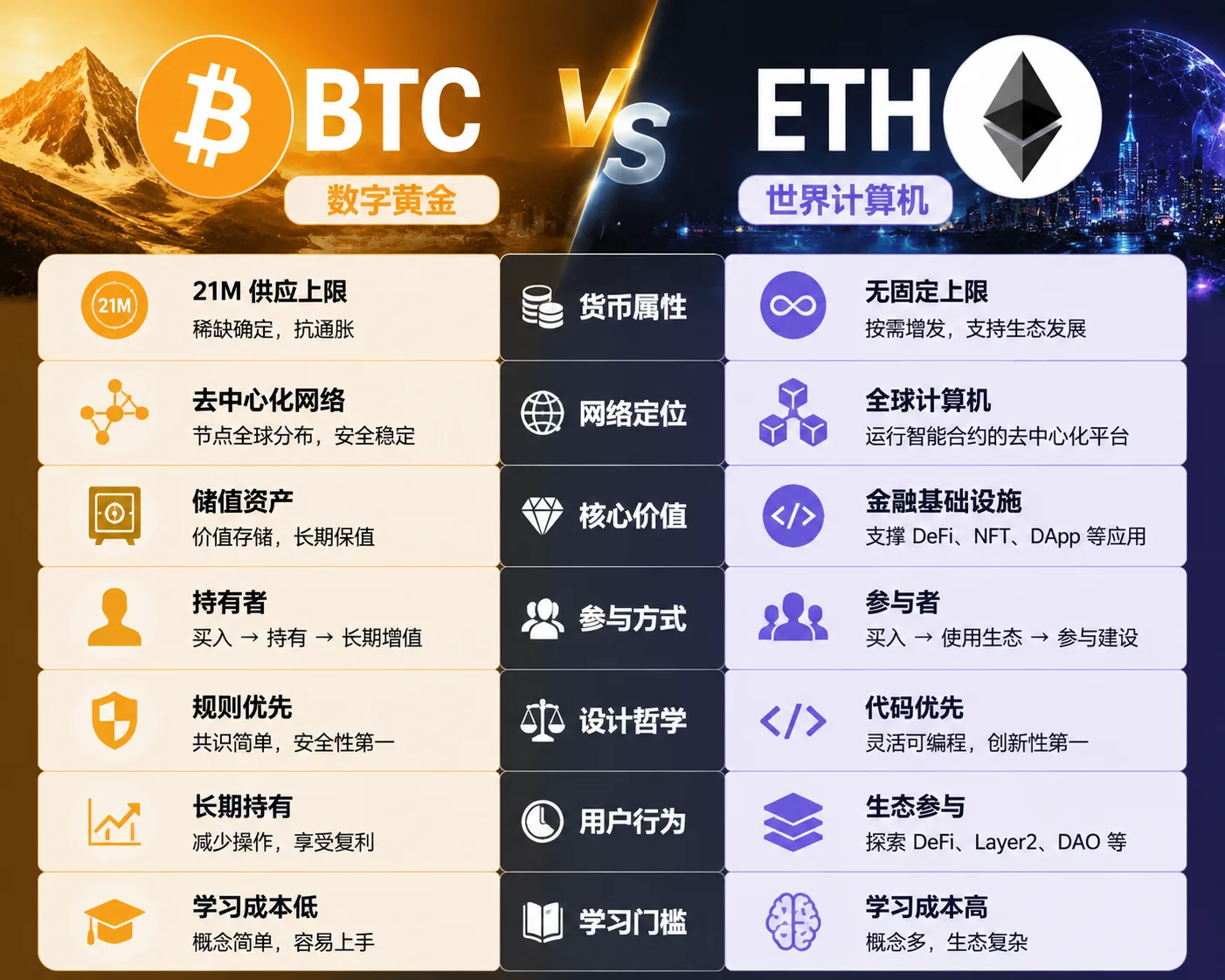
Figure 1: Bitcoin and Ethereum represent two different directions — BTC leans toward digital asset and store of value, ETH leans toward programmable finance and on-chain apps.
2. Bitcoin or Ethereum: which is better? Look at three variables first
"Which is better" has no answer that fits everyone.
For a first-time buyer, the most important thing is to look at three variables:
- your goal
- how much learning time you're willing to invest
- how much volatility and complexity you can handle
The amount is actually a fourth question. Buying 50 USDT, 500 USDT, or 5,000 USDT only changes position size — it doesn't change the roles of BTC and ETH themselves.
Variable 1: your goal
| Your goal | Better starting point |
|---|---|
| First contact with crypto, just want to try it | BTC |
| Want to hold a mainstream crypto asset long-term | BTC |
| Want to learn DeFi | ETH |
| Want to join ETH staking | ETH |
| Want to use Layer 2 | ETH |
| Want to learn wallets and on-chain interaction | ETH |
| Completely unsure why you're buying | BTC |
| Bullish on both | Can use BTC as the base, ETH as a complement |
If you can't even explain why you're buying right now, don't start with the more complex path. When unsure, pick the simpler one.
Variable 2: how much time you're willing to spend learning
One of the biggest practical differences between BTC and ETH is what you'll need to keep learning.
If you're just holding BTC long-term, a beginner mainly needs to learn:
- exchange account security
- wallet addresses
- seed phrases and private keys
- withdrawal networks
- transaction confirmation
- self-custody
But if you want to actually use the ETH ecosystem, you'll keep running into:
- gas fees
- smart contracts
- token approvals
- Layer 2
- DeFi protocols
- cross-chain bridges
- wallet approvals
- phishing sites
- contract risk
So:
| Your time situation | Better fit |
|---|---|
| Don't want to research much, just buy and hold | BTC |
| Willing to keep learning wallets and on-chain operations | ETH |
| Not sure yet if you're interested | Start with BTC, decide later |
This isn't saying ETH is "harder so it's worse." Rather, much of ETH's real utility comes from the Ethereum ecosystem. If you don't plan to use these features at all, you're really just holding ETH without using most of its on-chain purpose.
Variable 3: how much complexity and volatility you can accept
Both BTC and ETH are highly volatile crypto assets and can both see significant drawdowns.
The difference is that ETH, beyond the price itself, is affected by more ecosystem variables, such as:
- Layer 2 development
- DeFi activity
- staking conditions
- the smart-contract ecosystem
- competition from other chains
- network upgrades
- changes in on-chain fees
BTC's holding logic is relatively more concentrated.
So when the market falls, a beginner holding BTC often only needs to ask:
Has my long-term holding logic changed?
But holding ETH, many people will keep asking:
Will Solana take users away? Will Layer 2 affect ETH's value? Why is DeFi activity dropping? Why is gas getting lower and lower?
These variables don't mean ETH is necessarily riskier, but they do add judgment difficulty. If you easily keep changing your plan because of short-term price moves, simplicity itself is an advantage.
3. For your first purchase, why BTC is a better starting point
This isn't saying BTC will definitely rise more than ETH. The real reason is:
BTC demands fewer decisions from a beginner.
For someone who just buys and holds BTC long-term, there's usually no need to learn smart-contract approvals, DeFi protocols, liquidity pools, cross-chain bridges, or token approvals just to hold BTC.
The Bitcoin ecosystem itself also has Lightning, second-layer networks, and other scaling applications, but for a beginner "buying BTC for the first time and holding it," these aren't things you must master immediately.
The most important thing about your first purchase isn't the return rate — it's completing these basic steps:
Register → KYC → buy → enable security settings → understand wallets → learn to hold long-term
If your first money goes toward researching wallets + gas + DeFi + cross-chain + airdrops + NFT + Layer 2 all at once, the learning cost rises fast.
And many beginners actually lose money not because they chose BTC or ETH wrong at the start, but because of: too many operations, frequent coin-switching, chasing hot trends, falling for phishing links, approval mistakes, wrong networks, and overconfidence after gains.
So for someone with no experience at all:
First use BTC to learn "how to buy, how to store, how to handle volatility," then decide whether to add ETH — this is usually easier to execute.
4. BTC and ETH's risks aren't exactly the same
Both carry market risk, but the risk structure a beginner actually faces is different.
| Risk type | Ordinary long-term BTC holding | ETH + on-chain interaction |
|---|---|---|
| Large price swings | Yes | Yes |
| Exchange account risk | Yes | Yes |
| Losing private keys / seed phrase | Yes | Yes |
| Wrong address | Yes | Yes |
| Wrong network | Yes | Yes |
| Smart-contract risk | Usually not for ordinary holding | Often involved |
| Token approval risk | Usually not for ordinary holding | Common when using DeFi |
| Cross-chain bridge risk | Usually not for ordinary holding | Involved when bridging |
| Phishing interaction risk | Yes, but fewer scenarios | More scenarios with on-chain use |
| Learning cost | Lower | Higher |
So you can't simply say "BTC is safe, ETH is unsafe." The more accurate statement is:
For ordinary holding, both require attention to account and private-key security; if you further use ETH's DeFi, cross-chain, and smart-contract ecosystem, an extra layer of operational risk is added.
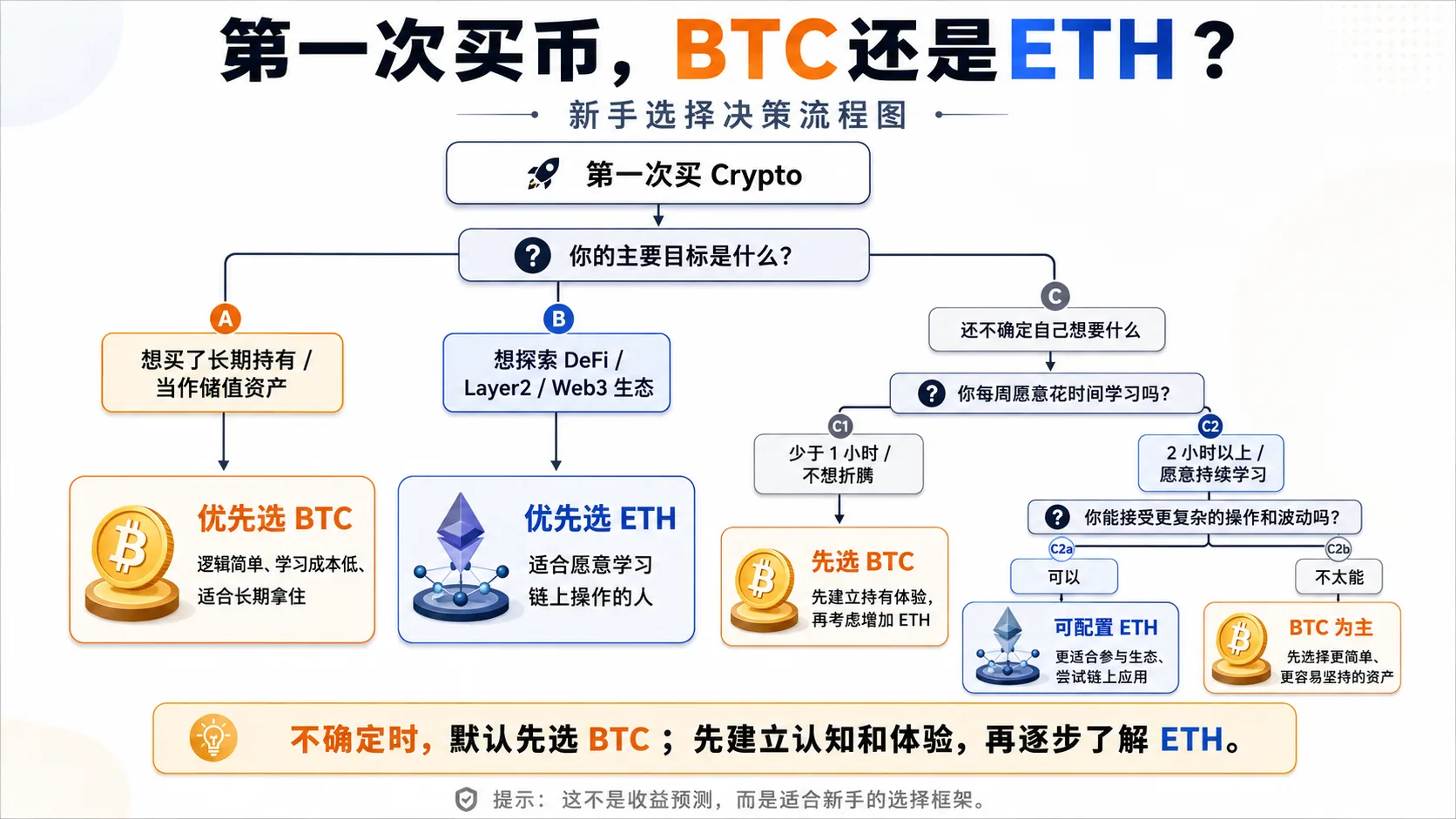
Figure 2: BTC's holding logic is simpler and needs fewer decisions; ETH is more participatory but requires continuous understanding of on-chain tools and risks.
5. When is ETH the better choice?
If you already clearly know why you need ETH, then ETH can absolutely be your first crypto asset.
For example, you want to:
- use Uniswap
- try Aave
- use Layer 2 networks like Base, Arbitrum, Optimism
- learn smart contracts
- join ETH staking
- use on-chain wallets
- go deeper into Web3
At this point, ETH is no longer just "another coin" — it's more like the base asset for entering the Ethereum ecosystem.
But every on-chain capability you add also adds corresponding risk.
| What you want to do | Extra things to watch |
|---|---|
| DeFi | Smart-contract bugs, protocol risk |
| Wallet interaction | Phishing sites, fake signatures |
| Token approvals | Unlimited approvals, malicious contracts |
| Cross-chain | Bridge security risk |
| Staking | Staking method, liquidity, third-party platform risk |
| Layer 2 | Network choice, bridging, and address confirmation |
So ETH isn't better suited for "smarter people" — it's for people willing to learn, willing to understand on-chain operations, and genuinely ready to use these features.
If you don't plan to enter these ecosystems at all, and just buy and leave it on an exchange watching the price, then many of ETH's features have no practical meaning for you for now.

Figure 3: The prerequisite for choosing ETH isn't predicting it will rise more, but that you genuinely plan to learn gas, wallets, smart contracts, and on-chain operations.
6. BTC or ETH? Final selection table for beginners
If you're still hesitating after reading this far, just look at this table.
| Your situation | Better starting point | Reason |
|---|---|---|
| First crypto purchase | BTC | Simpler logic, fewer decisions |
| Just want to hold long-term | BTC | No need to learn complex on-chain operations just to hold |
| Want to use DeFi | ETH | ETH is the core asset of the Ethereum ecosystem |
| Want to join staking | ETH | ETH can be used for Ethereum PoS staking |
| Want to learn Web3 | ETH | Smart contracts and dApps are more direct |
| Want to learn Layer 2 | ETH | Most Ethereum L2s run around the ETH ecosystem |
| Bullish on both | BTC + ETH | The two play different roles |
| Completely unsure how to choose | A small amount of BTC | Get the buying and security flow working first |
One-sentence summary:
Want to simply hold? Start with BTC. Want to join the on-chain ecosystem? Choose ETH. Bullish on both? No need to force an either/or.
7. Four beginner profiles, matched to each
Profile A: first contact, trying with $500
You don't know what a wallet is, don't know what gas is, only know that BTC and ETH are both mainstream coins.
In this case, start with BTC. The reason isn't that BTC definitely returns more, but that you first need to learn: how to buy, how to set up account security, how to handle price swings, what a wallet is, and what private keys and seed phrases are.
Even if $500 doubles, it won't completely change your life. But if your first money is lost to complex operations, scams, or frequent chasing of pumps and dumps, a beginner can easily quit this market altogether.
For your first purchase, getting the process right matters more than picking the highest-return asset on your first try.
Profile B: internet / AI professional, technically inclined
You follow tech, know Web3, have used wallets, and have clear interest in blockchain applications.
In this case, consider BTC as the base + ETH as a complement. For example, build a base position with BTC first, then use a smaller portion of ETH to actually experience wallets, Layer 2, DeFi, block explorers, gas, and token approvals.
Your advantage is learning ability; your risk is that "understanding the concept" doesn't mean you've mastered the actual operation — real signing, approvals, transfers, and cross-chain are far more complex than reading articles.
Profile C: already used DeFi
If you've already used Uniswap, used Aave, can read gas, can use Layer 2, can check approvals, and know cross-chain risk, then you're no longer a typical first-time buyer.
At this point, ETH's practical value rises clearly. You can raise your ETH proportion according to your needs, while keeping some BTC as a relatively simple base allocation.
The point is no longer "which is more advanced, BTC or ETH," but how much simple-holding asset and how much on-chain ecosystem asset your portfolio needs.
Profile D: want to double up quickly with ETH
If your thinking is "BTC is too slow, ETH is more volatile, so it should be easier to double up," then hold off before placing an order.
The real problem isn't BTC or ETH — it's your expectation. If you check the price a dozen times a day and want to chase whenever you see others making money, then whether you buy BTC, ETH, or any other coin, it's easy to fall into "chase the rise → panic in the dip → switch coins → chase again → lose again."
A better approach is: first hold a small amount you can fully afford to lose for a while, and see whether you can accept real volatility. Only when your question shifts from "which rises faster" to "which asset am I prepared to participate in long-term" does the choice truly become meaningful.
8. Buying the right BTC or ETH doesn't mean you can hold it
Choosing the right asset and actually making money are two different things.
Many beginners go through a path like this:
First buy BTC → BTC rises → think you understand it → add to your position → start chasing altcoins → market pulls back → altcoins drop more → panic sell → finally sell the BTC too
The problem isn't BTC or ETH — it's that the first rise easily creates an illusion: mistaking a market rise for your own judgment.
Mistake 1: suddenly growing your position after a rise
You only bought 500 USDT the first time, and after it rose you thought "if only I'd bought 5,000," so next time you actually buy 5,000. Then if the market pulls back 15%, your unrealized loss can exceed what you earned the first time.
Mistake 2: going from holding to trading
You originally planned to "hold for a year," but after a rise it becomes "can I buy low and sell high," and then you watch the charts daily and switch positions frequently.
Long-term holding and short-term trading are completely different skills. Don't promote yourself to trader just because of your first rise.
Mistake 3: switching to ETH because BTC's unit price is high
This is one of the most common beginner misconceptions. "One BTC is so expensive, I can't afford it — ETH is cheaper." This logic is wrong.
You can buy fractions of both BTC and ETH — for example 0.001 BTC, 0.01 BTC, 0.05 ETH, 0.1 ETH are all possible.
What you should actually compare is the percentage your invested amount rises or falls, not the price of one whole coin. If 100 USDT of BTC rises 10% and 100 USDT of ETH rises 10%, your return ratio is the same.
Mistake 4: thinking better technology must rise more
Technical capability and price performance aren't the same thing. A blockchain with higher TPS, lower gas, and more frequent updates doesn't mean it will necessarily outperform BTC or ETH in the future.
Market price is affected by many factors at once: capital, macro environment, regulation, user growth, institutional demand, market cycles, and narrative.
9. What to do if you chose wrong the first time
Your first BTC or ETH purchase isn't a permanent binding — you can always adjust later.
Already bought BTC, later came to like ETH more
You don't necessarily need to sell all your BTC to switch to ETH. A simpler approach: keep your original BTC and let new incoming funds gradually allocate into ETH. This reduces frequent trading and emotional adjustments.
Already bought ETH, but found on-chain too complex
You also don't need to think "did I choose wrong?" You can reduce the ETH proportion and bring the portfolio back to a complexity you can handle.
If you're busy with work now and have no time to research DeFi, that just means your current life stage isn't suited for high-frequency on-chain participation. You can always relearn later when you have time.
Your first choice is only a starting point. What really matters is not repeatedly rebuilding your investment logic because of a single rise or fall.
10. A 90-day route after your first purchase
In the first three months after your first purchase, the most important thing isn't chasing returns — it's building security habits → understanding the asset → then building a long-term strategy.

Figure 4: A 90-day journey for Bitcoin and Ethereum beginners — month 1 security, month 2 understanding the ecosystem, month 3 setting strategy.
Month 1: solve security first
Day 1: complete your first purchase and write down "why I'm buying BTC / ETH." If you haven't registered and completed identity verification yet, first see → How Does Binance KYC Work? Review Time, Failure Reasons, and Fixes (2026).
Day 3: complete 2FA, anti-phishing code, withdrawal whitelist, and account device check → How to Set Up Google 2FA? Binance/OKX Binding Steps (2026).
Day 7: understand wallets, addresses, private keys, seed phrases, hot wallets, cold wallets → What Is a Crypto Wallet? A Guide to Cold, Hot, and Hardware Wallets. Only seriously research self-custody once your funds reach a size whose loss you'd truly care about.
Day 30: first review — did you change your plan because of rises and falls? How many times a day do you check the market? Does your current position affect your sleep? Do you prefer simple holding or on-chain participation?
Month 2: start understanding the ecosystem
BTC path: learn more about the Bitcoin network, UTXO, Lightning Network, self-custody, and hardware wallets. The key is understanding that BTC isn't just a string of numbers on an exchange.
ETH path: keep learning gas, smart contracts, token approvals, Layer 2 (Arbitrum / Optimism / Base), and try one small on-chain operation you can fully afford to lose → Ethereum Gas Too Expensive? Arbitrum/Optimism/Base Compared (2026). Also learn block explorers, wallet signatures, checking approvals, and verifying contract addresses.
Day 60: second review — have you started doing operations outside your original plan because of watching too many charts? If so, what really needs adjusting isn't the BTC/ETH ratio, but your operation frequency.
Month 3: build your own strategy
| Your real feeling over these three months | Direction worth considering |
|---|---|
| Holding feels peaceful, don't want frequent operations | DCA into BTC |
| Still want to go deeper into the on-chain ecosystem | Gradually add ETH |
| Very anxious on every dip | Lower your total position |
| Already in love with Web3 | Keep researching other chains on top of BTC/ETH |
| Don't want to research on-chain at all | No need to force-buy ETH for hot trends |
If you're ready to start long-term DCA → How to DCA into Bitcoin? Frequency, Amount, and Binance Practice for Beginners (2026).
If you've started researching other chains → Is Solana Worth Buying? A Beginner Review (2026).
After three months, you should gradually move from "which do others say is better" to "which fits my time, risk tolerance, and use case better." That judgment is more important than any fixed BTC/ETH allocation ratio.
11. FAQ
Bitcoin or Ethereum: which is better?
There's no absolute answer. If it's your first purchase and you're not yet familiar with wallets and on-chain operations, BTC is usually a simpler starting point; if you clearly want to use DeFi, staking, Layer 2, or other Web3 apps, ETH has more practical use. Many people also don't choose just one — they hold both BTC and ETH.
What's the biggest difference between Bitcoin and Ethereum?
The biggest difference isn't price — it's positioning. BTC leans toward store of value and decentralized digital asset; ETH leans toward programmable blockchain and smart-contract ecosystem. BTC's total supply is capped at about 21 million; ETH has no fixed supply cap, and has both PoS new issuance and a transaction-fee burning mechanism.
For a beginner's first purchase, BTC or ETH?
If you don't yet know what gas, DeFi, and smart contracts are, you can usually start with BTC and first work through "register → KYC → buy → security settings → hold," then decide whether to add ETH later. If you're buying specifically to learn DeFi and Web3, you can start with a small amount of ETH directly.
Is it still worth buying Bitcoin or Ethereum in 2026?
BTC and ETH are both highly volatile crypto assets. High historical standing and large market size don't mean they'll definitely rise in the future, or that they won't see major drawdowns. Whether it's worth buying should depend on whether this money isn't needed short-term, whether you can bear losses, whether you understand the asset, and whether you have a long-term plan — not just the current price.
How much should I buy the first time?
There's no universal answer. The most important thing about your first purchase is getting familiar with the process, not investing a large amount at once. You can start with "a small amount that wouldn't affect your life even if it all went to zero" — a few dozen USDT is enough to complete your first purchase, account security, and wallet learning.
Bitcoin is too expensive — I can't afford one coin?
You don't need to buy a whole BTC. BTC can be bought in fractions — for example 0.001 BTC, 0.005 BTC, 0.01 BTC are all possible. ETH is the same; you don't need to buy a whole coin. Don't let "unit price" affect your judgment of an asset.
Can a beginner buy only Ethereum and not Bitcoin?
Yes. There's no rule that BTC and ETH must be bought together. If you very clearly want to learn DeFi, do on-chain interaction, join staking, or use Ethereum Layer 2, then starting directly with a small amount of ETH is also reasonable. But if you don't know your purpose at all, BTC is usually easier to understand.
Which is safer, Bitcoin or Ethereum?
You can't simply say one is absolutely safer. For long-term holding, both require attention to account security, private keys, seed phrases, address verification, and custody platform risk. The difference: if you use ETH's DeFi, token approvals, and cross-chain bridges, you also add smart-contract, approval, and on-chain interaction risk. So ordinary BTC holding usually has a simpler operation surface; going deep into the ETH ecosystem means managing more types of risk.
DCA into Bitcoin or Ethereum?
You can DCA into both. If you want a simpler portfolio, use BTC as the base; if you're long-term bullish on the Ethereum ecosystem, you can DCA into both BTC and ETH. The core value of DCA is reducing timing risk, not guaranteeing returns.
Can I buy BTC and ETH at the same time?
Yes, and it's a very common approach. BTC and ETH play different roles in a portfolio — BTC leans toward long-term holding and store of value, ETH leans toward ecosystem participation and on-chain apps — so there's no need to treat the two as an either/or.
If I can only choose one, BTC or ETH?
For a beginner with no experience at all, you can usually start with BTC. The reason isn't that BTC will definitely rise more, but that its logic is simpler and it demands fewer decisions. If you're already very clear about learning DeFi, staking, and on-chain apps, then ETH fits your actual use better.
Related reading
- Buying BTC for the First Time in 2026: How, How Much, Where to Store, and When to Sell — the complete practical guide once you've decided to buy BTC
- How to DCA into Bitcoin? Frequency, Amount, and Binance Practice for Beginners (2026) — a long-term strategy worth reading once you've settled
- What Is Ethereum? Smart Contracts, Gas Fees, and Web3 — if you're going to buy ETH, understand what it's actually for first
- How Do Beginners Buy Crypto? 7 Things to Know Before Buying USDT (2026) — the basics before your first order
- Solana or Ethereum? How to Choose for Your First On-Chain Experience (2026) — if you've started comparing chains, keep reading here
- Bitcoin Private Key Security: 6 Decisions That Determine Whether You Lose Your BTC (2026) — a required lesson once your BTC amount grows
Disclaimer
This article is only for crypto knowledge sharing and experience exchange, and does not constitute investment advice, financial advice, or trading advice.
Crypto asset prices are volatile, and there may be market risk, liquidity risk, regulatory policy risk, network security risk, smart-contract risk, and operational risk. The historical performance of BTC and ETH does not represent future returns.
The content about choosing and allocating BTC and ETH is only meant to help understand the characteristics of different assets. Readers should make independent decisions based on their own financial situation, risk tolerance, investment goals, and local laws and regulations.
Crypto investment can result in partial or total loss of principal. Never invest money you cannot afford to lose.
See ourEditorial Policy and the correction process in ourCorrections Policy.
The CoinTrailHub editorial team focuses on crypto education for beginners, exchange security and P2P trading risk. This article is compiled from official sources and public data, reviewed by humans, and strives for accuracy but is not investment advice.
Last updated:2026-10-06 · Content reviewed by humans · Learn more
© 2026 CoinTrailHub · Original content. Reproduction or rewriting without permission is prohibited.